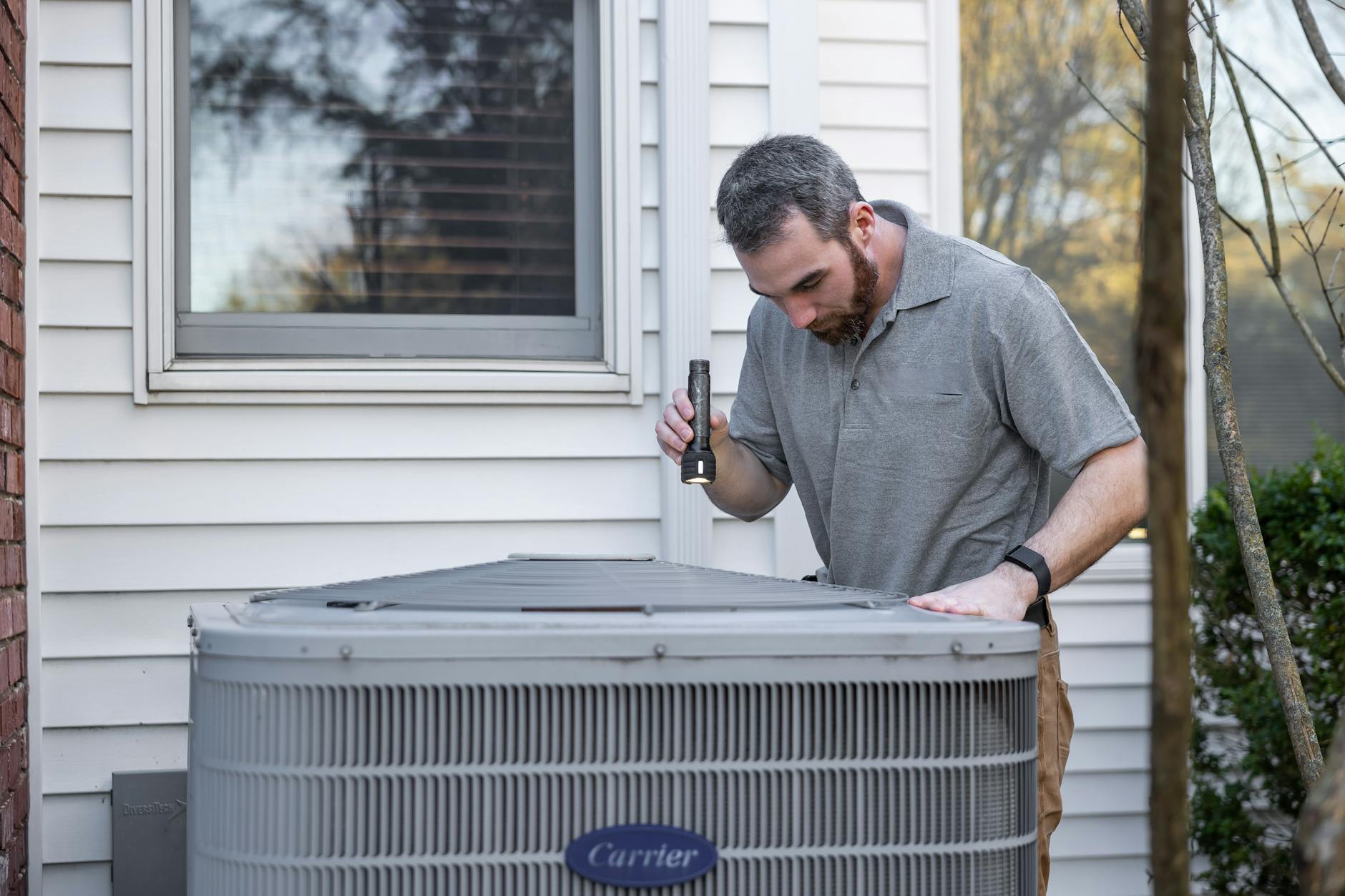
The Admin Side of HVAC Work
HVAC technicians deal with a particular documentation load: load calculations to explain, proposals to write before a competitor gets there, maintenance reports to send after every visit, and seasonal marketing campaigns to send to hundreds of customers at once. The prompts below are specific to HVAC work: the right terminology, the right regulatory context, and outputs that reflect what customers in this trade actually need to hear. Each prompt is ready to paste into ChatGPT, Claude, or Gemini. Fill in the brackets and review before you use them.
Copy-Paste Prompts for HVAC Technicians
Prompt 1: Manual J Load Calculation Summary for Homeowner
I ran a Manual J load calculation for a residential customer. Inputs: square footage [SQ FT], ceiling height [HEIGHT ft], construction type [older wood frame / new construction / well-insulated 2x6 walls], window type [single pane / double pane / triple pane], window area and orientation [DESCRIBE], local design temperatures [SUMMER DB/WB, WINTER DB in degrees F], insulation values [wall R-VALUE, attic R-VALUE], duct location [conditioned space / unconditioned attic / vented crawlspace]. Results: [COOLING BTUH] BTU/h sensible cooling load, [HEATING BTUH] BTU/h heating load. Recommended equipment: [X]-ton cooling, [Y]-BTU/h heating. Write a one-page customer-friendly explanation of what these numbers mean, why correct sizing matters (explain the problems with both oversized and undersized equipment in plain terms), and how the recommended system size was determined from these specific inputs. No equations. Plain language for a homeowner with no HVAC background.
Customize: Your actual load inputs and results, the recommended system size, and any factors that significantly drove the calculation for this specific home.
Prompt 2: Fall Heating Tune-Up Reminder Text Campaign
Write four short text message variations (each under 160 characters) to send residential customers in [MONTH] reminding them to schedule a heating system tune-up before cold weather arrives. Each version should take a different angle: one emphasizes urgency (limited appointments), one emphasizes cost savings (catch problems before they become expensive), one emphasizes safety (heat exchanger and carbon monoxide), one is a simple friendly reminder. Include a call-to-action to reply or call to book. Company name: [COMPANY NAME]. No slang or emojis unless requested.
Customize: Month, your company name, your booking phone number or text keyword, and whether you want emojis.
Prompt 3: Maintenance Plan Upsell Script for Tech to Use On-Site
Write a conversational phone or in-person script for an HVAC technician to use at the end of a service call to offer the company's maintenance plan. The tech just completed a [tune-up / repair / new install]. The plan includes: [two visits per year spring and fall / priority same-day scheduling / 15% parts discount / no after-hours upcharge for plan members]. Annual price: $[PRICE]. The script should: briefly summarize what was done today in plain language, transition naturally to mentioning the plan, explain two or three benefits that are relevant to what was found today, handle the common response "I'll think about it" with a specific follow-up offer (call back in two days), and close by asking for a simple yes or no. Under two minutes of speaking time. Conversational, not a sales pitch.
Customize: What service was just performed, your specific plan inclusions, annual price, and your follow-up process.
Prompt 4: R-22 System Replacement Proposal
Write a proposal for replacing an R-22 refrigerant system that is [AGE] years old. Customer situation: [the system needed a refrigerant charge / R-22 cost is prohibitive / the system is losing efficiency / a major component failed]. Explain in plain terms: what R-22 is and why it is being phased out under EPA Section 608, the current market price of R-22 refrigerant at $[PRICE] per pound, why continued repair investment at this point does not make financial sense, and how the proposed [X]-ton [BRAND MODEL] [SEER2 RATING] SEER2 system compares on energy efficiency and estimated monthly operating cost. New system price: $[PRICE] installed, including removal and disposal of old equipment, new refrigerant lineset if needed, and startup commissioning. Financing available: [OPTION]. Use a factual tone focused on cost comparison over the next five years, not alarm about the old system.
Customize: System age and condition, current R-22 cost in your market, new system brand, model, SEER2 rating, your installed price, and financing options you offer.
Prompt 5: Indoor Air Quality Add-On Pitch
Write a short one-page pitch for adding an indoor air quality product to a new system installation or maintenance visit. Product: [whole-home air purifier / UV-C light system for the coil / media air cleaner / ERV or HRV for a tight home]. Explain in plain language: what the product does, which specific problem it addresses ([airborne particulates / biological growth on the indoor coil / stale air from tight construction / VOCs from building materials]), how it integrates with the existing or new system, and what the added investment is ($[PRICE] installed). Include one to two sentences about which customers benefit most: [allergy or asthma households / new construction or recently sealed homes / homes with pets / households with small children]. No medical claims. Focus on air quality improvement and equipment protection.
Customize: The specific product you stock and install, what it addresses, your installed price, and the customer profile it fits best.
Prompt 6: After-Hours Emergency Response Script
Write an after-hours phone script for an HVAC dispatcher when a customer calls with [no heat and outdoor temperature is below freezing / air conditioning failed during a heat advisory / system running but not reaching set temperature]. The script should: acknowledge the urgency without causing panic, ask three quick diagnostic questions (thermostat set correctly and displaying normally? / any error codes or flashing indicator lights? / when did the problem start?), set realistic expectations (tech will arrive within [X] hours), state the after-hours rate ($[RATE] service call fee), and confirm the address and best callback number. For a no-heat call in freezing temperatures, include a brief safety note: what to do while waiting (electric space heaters away from combustibles, watch for frozen pipes in unheated areas). Under 90 seconds of dialogue.
Customize: Emergency type, your after-hours arrival window, your after-hours rate, and appropriate safety guidance for your climate zone.
Prompt 7: SEER2 Efficiency Upgrade Explanation
Write a plain-language explanation of SEER2 ratings to share with a homeowner replacing their air conditioning system. Their existing system is a [SEER RATING] SEER unit. You are proposing a [NEW SEER2 RATING] SEER2 replacement. Explain: what SEER2 is (the updated efficiency testing standard that replaced the old SEER rating in 2023), why SEER2 numbers appear slightly lower than equivalent old SEER ratings (stricter test conditions), what the federal minimum SEER2 requirement is for [northern / southern / southwest] states, and approximately how much less the new system will cost to run per year based on [ANNUAL COOLING HOURS] cooling hours and $[KWH RATE] per kWh electricity cost. Show the math in a simple two-row table (old system vs. new system). End with a one-sentence recommendation.
Customize: Old SEER rating, proposed SEER2 rating, your regional minimum requirements, local electricity rate, and estimated cooling hours for your climate zone.
Prompt 8: Post-Visit Startup Email to Homeowner
Write an email to send to a residential customer after completing a [spring AC startup / fall furnace startup / annual maintenance visit]. Explain what was checked in plain language (no abbreviations): [LIST YOUR STANDARD CHECKLIST ITEMS]. What was found on this specific visit: [good / adjusted / replaced / flagged for monitoring]. Any items to watch before the next service visit: [describe]. Any recommended repairs or upgrades with brief explanation and price: [describe or write "none at this time"]. Close by thanking them and giving a direct way to reach the technician who did the work. Under 250 words. Professional but conversational, like a note from a tech who actually cares about the equipment.
Customize: Season and visit type, your standard checklist items, actual findings, and any repair recommendations with pricing from this specific visit.
Prompt 9: Warranty Registration Reminder
Write a short email to send to a customer two weeks after installing a new [BRAND] [PRODUCT TYPE] system reminding them to register the equipment warranty. Explain: what registering the warranty does (activates the full manufacturer warranty period, often extending from a shorter default period to [X years parts, Y years compressor]), how to register (online at [MANUFACTURER WEBSITE] or we can do it for them if they send us the model and serial number), and what information they will need (model number and serial number, which are on the label on the [outdoor unit / indoor unit / nameplate location]). Keep it short, practical, and helpful. Under 150 words.
Customize: Equipment brand and type, warranty period details, registration website, and where the model and serial number are located on their specific equipment.
Time Comparison: Manual vs. AI-Assisted
| Task | Manual time | With AI | Prompt above |
|---|---|---|---|
| Manual J customer summary | 25 to 40 min | 5 to 8 min | Prompt 1 |
| Seasonal text campaign (4 versions) | 30 to 45 min | 4 to 6 min | Prompt 2 |
| Maintenance plan phone script (one-time) | 60 to 90 min | 10 to 15 min | Prompt 3 |
| R-22 replacement proposal | 45 to 60 min | 10 to 15 min | Prompt 4 |
| IAQ add-on pitch (one-time per product) | 60 to 90 min | 10 to 12 min | Prompt 5 |
| After-hours dispatch script (one-time) | 60 to 90 min | 10 to 12 min | Prompt 6 |
| Post-visit startup email | 15 to 25 min | 4 to 6 min | Prompt 8 |
Worked Example: Turning a Tune-Up Call into a System Replacement
A tech arrives for a standard $99 fall tune-up on a 15-year-old R-22 heat pump. During the inspection he finds the refrigerant charge is low, the dual-run capacitor is near the bottom of its spec range, and the contactor contacts are pitted. To recharge the system and replace both parts, the customer is looking at over $700 in repairs on equipment that is three years past its expected service life and running on a refrigerant that costs $28 per pound wholesale.
The tech texts the office with the findings. The office manager opens Claude, pastes Prompt 4 with the specific details: 15-year-old R-22 system, low charge needing 2.5 pounds at $28/lb plus labor, recommending a 3-ton Carrier 18 SEER2 system at $7,400 installed with Synchrony financing. She gets a clean, readable proposal in about 12 minutes that walks through the five-year cost comparison clearly without being pushy about it.
While the tech is still on site, he also goes through Prompt 3 verbally to explain the maintenance plan option in case the customer wants to proceed with the repair instead of replacing. The customer asks to see the replacement proposal before deciding. She receives it by email within 20 minutes of the tech leaving. She calls back that afternoon and approves the replacement. The paperwork for the whole sequence took under 25 minutes of office time.
Frequently Asked Questions
Can AI run an actual Manual J load calculation?
No. AI can summarize and explain the results of a Manual J calculation, but it cannot run the calculation with the precision required for equipment sizing. Use dedicated Manual J software such as Wrightsoft, Elite RHVAC, or Adtek for the actual calculation. Use AI to translate those results into a homeowner-friendly document using Prompt 1 above.
Is AI accurate enough for refrigerant-related cost estimates in proposals?
AI can explain refrigerant phase-out timelines and general cost trends accurately, but refrigerant pricing changes frequently and varies by market. Always use your current wholesale pricing when including a per-pound cost in a customer proposal. Do not rely on AI for EPA Section 608 compliance guidance; consult the current EPA regulations or your HVAC distributor directly.
Can I use AI to generate AHRI-certified match documentation?
No. AI can help you write the customer-facing narrative around a matched system, but the AHRI Certificate itself must come from the AHRI Directory for your specific indoor and outdoor unit combination. Pull the certificate from ahridirectory.org for every new install. AI cannot generate or substitute for that document.
How do I make AI output sound like my company and not a template?
Add a style instruction at the top of your prompt. For example: "Write in a friendly, direct tone. Short sentences. Avoid technical jargon unless explained in plain language. This is for a homeowner with no HVAC background who is making a significant financial decision." Consistent style instructions produce consistent results. After a few uses you will also learn which default phrasings AI tends to use that do not match your voice, and you will know to swap those out manually.
What should HVAC technicians never let AI handle on its own?
Never use AI to: determine refrigerant charge amounts or procedures by description alone, diagnose electrical faults inside equipment, write anything that implies a specific safety guarantee, or advise a homeowner what to do with a gas furnace that will not light without immediate professional follow-up. Refrigerant handling requires EPA 608 certification. Gas work requires your local gas fitter licensing. These are not documentation tasks, and no AI output changes the licensing requirements around them.
Where AI Stops and Your Certifications Start
AI does not hold an EPA Section 608 certification and cannot advise on refrigerant recovery, reclaim, or charge procedures. It does not hold a gas fitter license and cannot determine whether a gas appliance installation meets your local gas code. It cannot inspect a heat exchanger for cracks or certify combustion safety. It cannot make the field call that a 15-year-old R-22 system with a marginal capacitor, pitted contacts, and low charge is a system approaching failure rather than a system worth continued repair investment. That judgment is yours, built from your training and your time in the field. AI writes the proposal after you make the call. That is the right division of labor in this trade.