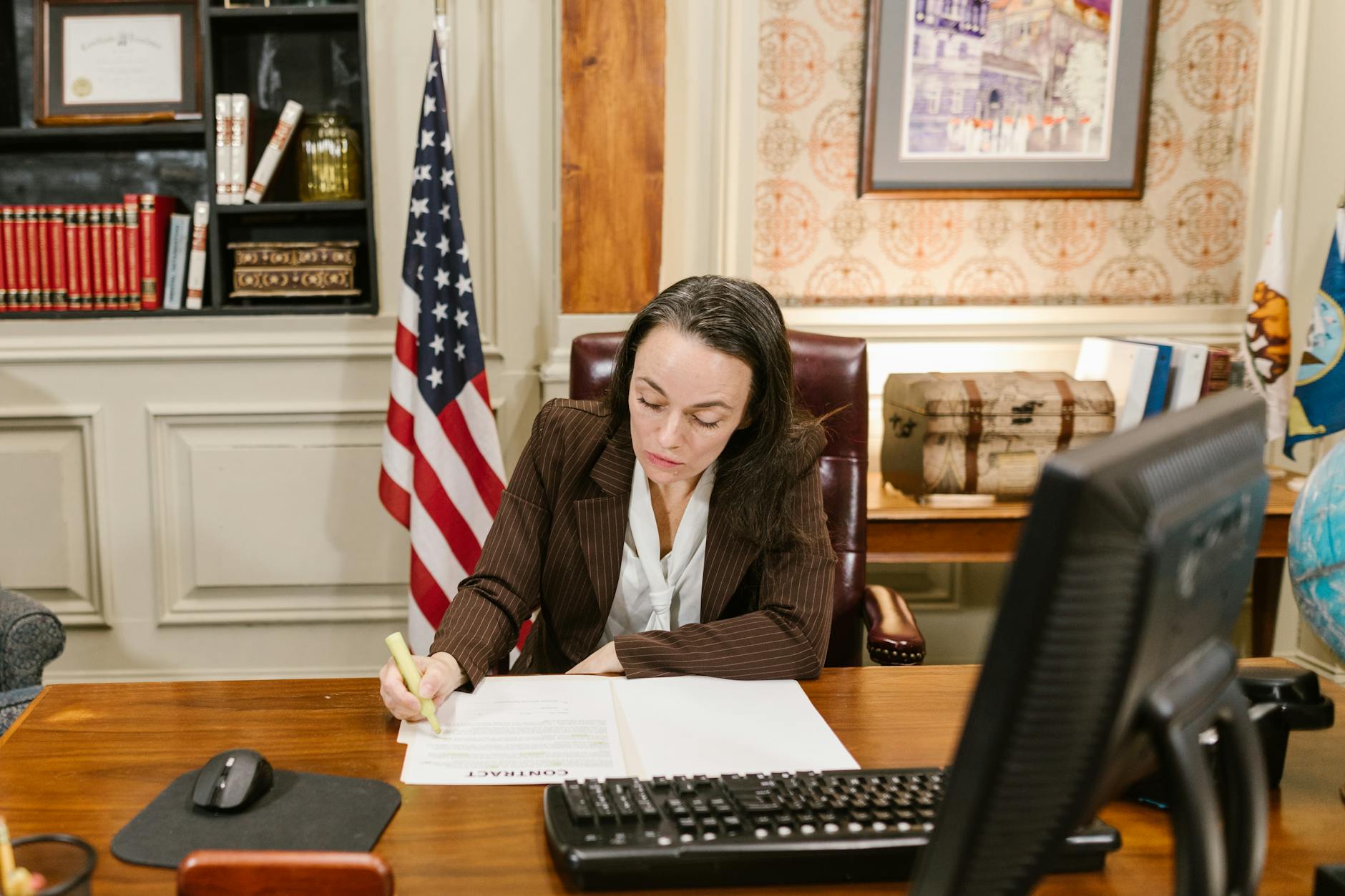
How Lawyers Use AI as a Drafting and Research Partner
Legal work involves a lot of writing that follows predictable patterns: client intake summaries, clause explanations, deposition question frameworks, demand letter structures. AI handles first drafts of those patterns well. What it cannot do is replace your judgment about the law, the facts, or the client relationship. The prompts below treat AI as a research and drafting assistant, not as a lawyer.
Every output in this guide requires attorney review before it goes to a client or court. That is not just a disclaimer; it is the correct workflow for these tools.
10 Practical AI Prompts for Lawyers
Prompt 1: Contract Clause Plain-English Explainer
You are a legal writing assistant. I am a licensed attorney preparing a client explanation.

Clause text: [PASTE CLAUSE HERE]

Please provide:
1. A plain-English explanation of what this clause means (2-3 sentences, no legal jargon)
2. The key obligations it places on my client
3. Any terms that are unusual or potentially unfavorable
4. One clarifying question my client should ask before signing

This output will be reviewed and edited by a licensed attorney before reaching the client.
What to customize: Paste the actual clause text. If the contract is in a specific industry, such as SaaS, construction, or healthcare, add that context so the AI can flag industry-specific risks and standard vs. non-standard terms.
Prompt 2: Deposition Preparation Questions
I am an attorney preparing to depose a witness in a [case type] matter.

Witness role: [e.g., eyewitness, expert, corporate officer]
Core dispute: [brief description]
Key facts already established: [list 3-5 facts]
My client's position: [one sentence]

Generate 15 open-ended deposition questions that:
- Establish timeline and witness knowledge
- Probe inconsistencies with prior statements
- Set up impeachment opportunities if the witness changes their story
- Avoid leading questions and assumptions of facts not in evidence

Do not suggest questions that exceed what a careful attorney would ask at this stage.
What to customize: Paste the witness's prior statements or earlier deposition transcript if available. Specify whether this is federal or state court deposition practice, as permissible question forms can differ.
Prompt 3: Client Intake Summary Memo
I am an attorney who just completed a new client intake call. Using my notes below, draft a one-page intake summary memo that:
- Summarizes the client's stated facts in chronological order
- Identifies potential legal claims and required elements for each
- Lists key documents I should request in discovery
- Notes any statute of limitations concerns based on the dates mentioned
- Flags any obvious conflicts of interest issues to check

Intake notes: [PASTE YOUR HANDWRITTEN OR TYPED NOTES HERE]

Format as a memo I can file in the client folder. Do not draw final legal conclusions; mark issues for attorney review.
What to customize: Include the jurisdiction in your notes. The AI can then flag jurisdiction-specific statute of limitations timelines and local procedural requirements worth verifying.
Prompt 4: Case Law Research Starting Point
I need a research summary on the following legal question: [YOUR SPECIFIC LEGAL QUESTION]

Jurisdiction: [State or Federal, and specific court if known]
Practice area: [e.g., contract, employment, tort]
My client's key facts: [2-3 sentences]

Please provide:
1. The general legal standard courts apply to this issue
2. How courts have ruled when facts favor plaintiffs
3. How courts have ruled when facts favor defendants
4. Any recent trend in how courts are deciding this issue
5. Three research terms I should use in Westlaw or Lexis to find additional cases

This is a research starting point, not a final legal opinion. I will verify all citations independently.
What to customize: Be as specific as possible about the legal question. "Can my client terminate this contract?" is far less useful than "Can an employee terminate an employment contract for cause under Georgia law when the employer reduced compensation without consent?"
Prompt 5: Legal Brief Argument Outline
I am writing a [motion type: motion to dismiss / summary judgment / appellate brief] in a [case type] matter.

My position: [one-sentence argument]
The opposing argument I must rebut: [one sentence]
Key facts supporting my position: [3-5 bullet points]
Cases I am relying on: [case names or brief descriptions of holdings]

Generate a structured outline for the argument section that:
- States the applicable legal standard first
- Applies the standard to my facts in the most favorable order
- Directly addresses and rebuts the opposing argument
- Closes with a summary of why the court should grant relief

Provide only the outline with one-sentence descriptions of each subsection. Do not write the full brief.
What to customize: Add your key cases and their holdings. The more specific you are about the factual record and procedural posture, the more useful the outline structure will be for your specific motion.
Prompt 6: Demand Letter Opening Paragraphs
Draft the opening two paragraphs of a demand letter on behalf of my client against [OPPOSING PARTY DESCRIPTION, no real names].

The dispute involves: [brief factual description]
Legal basis for the claim: [legal theory]
Relief we are seeking: [dollar amount or specific action]
Prior communications: [any prior notices or correspondence sent]

Tone: firm and professional, litigation-ready but not gratuitously aggressive. This is a first demand letter. The attorney of record will review and send this letter.
What to customize: Adjust the tone instruction based on the relationship between the parties. A business partner demand reads differently than a consumer protection demand. Include any contractual notice provisions that affect timing.
Prompt 7: Settlement Offer Analysis Memo
Help me draft a written settlement analysis memo I can share with my client (after my review and revision) that:
- Summarizes the settlement offer in plain language
- Compares the offer to the realistic range of outcomes at trial
- Lists the risks of accepting and the risks of rejecting
- Explains the cost and timeline implications of each path
- Closes with a list of factors for the client to weigh

Settlement offer: [describe offer]
My estimate of trial outcome range: [range and basis]
Estimated remaining legal fees to trial: [amount]
Key trial risks: [list 2-3]

This memo will be reviewed, revised, and signed by the supervising attorney before delivery to the client.
What to customize: Add local jury verdict data for similar cases if you have it. Mention the judge's known tendencies and the realistic trial date, since delay is a real factor in settlement decisions.
Prompt 8: Client Email Explaining a Legal Concept
My client is a [description: e.g., first-time business owner with no legal background] who needs to understand [LEGAL CONCEPT] in the context of their matter.

Write a 200-word email explaining this concept that:
- Uses plain language and no legal jargon
- Uses one concrete example relevant to their situation
- Explains why it matters to their case specifically
- Ends with one action item for the client

Do not state legal conclusions about how the law applies to their specific facts. I will add my analysis separately.
What to customize: Specify the client's industry and background. A restaurant owner needs different examples than a tech startup founder. The more context you give, the more relevant the analogy will be.
Prompt 9: Attorney-Client Engagement Letter
Draft an attorney-client engagement letter for [service type: e.g., business formation, employment dispute, contract review].

Include:
- Scope of services (limited to the tasks I list below)
- Fee structure: [hourly/flat fee/retainer and rate]
- Client responsibilities: providing documents, responding within [X days], paying invoices
- Communication expectations: response times, preferred channels
- Billing practices: billing cycle, late payment policy
- Standard limitation of liability language
- Termination conditions for both parties

Services in scope: [list specific tasks]
Jurisdiction: [state]

Tone: professional and clear. The client should understand every clause without needing another attorney to interpret it.
What to customize: Check your state bar's requirements for engagement letters before using. Some jurisdictions require specific language for contingency fee arrangements, fee dispute procedures, or client file retention policies.
Prompt 10: Opposing Argument Stress Test
I am an attorney representing the [plaintiff/defendant] in a [case type] dispute. My core argument is: [one paragraph summary].

Please identify:
1. The five strongest arguments opposing counsel could make against my position
2. For each opposing argument, the type of evidence that would support it
3. Any weaknesses in my case that I have not yet addressed
4. Questions a skeptical judge might ask at oral argument

I will use this to strengthen my brief and prepare for hearing. Do not soften the critique; I need the strongest version of the opposing arguments.
What to customize: Give the AI your full argument, not just a summary. The more detailed your position, the more specific and useful the counterarguments will be. This prompt works best when used before you finalize your brief.
AI-Assisted vs. Manual Task Time Comparison
| Task | Manual Time (avg) | With AI Prompt | Estimated Time Saved | Attorney Review Still Required |
|---|---|---|---|---|
| Contract clause explanation (10 clauses) | 45 min | 12 min | 73% | Yes |
| Deposition question set (15 questions) | 60 min | 15 min | 75% | Yes |
| New client intake summary memo | 30 min | 8 min | 73% | Yes |
| Demand letter opening draft | 50 min | 10 min | 80% | Yes |
| Brief argument section outline | 40 min | 10 min | 75% | Yes |
| Settlement analysis memo | 45 min | 12 min | 73% | Yes |
Time estimates are approximations based on commonly reported attorney workflow times. Results vary by practice area, matter complexity, and individual experience.
Worked Example: Contract Clause Explainer in Practice
The prompt used: Prompt 1 above, with this actual clause pasted in: "Notwithstanding any other provision of this Agreement, in no event shall either party be liable to the other for any indirect, incidental, consequential, special, or exemplary damages, including but not limited to loss of revenue or anticipated profits, arising out of or related to this Agreement, even if advised of the possibility of such damages."
What the AI returned (excerpt): "This clause limits what your company can recover if the other party breaches the contract. Even if their breach causes you to lose significant business or expected profits, this clause says you cannot sue them for those specific losses. The clause applies equally to both sides. One term worth noting: there is no carve-out for losses caused by the other party's intentional misconduct or fraud. Many commercial contracts include such a carve-out, and its absence here is unusual. Suggested question for the other party: 'Will you add an exception to the liability cap for claims arising from gross negligence or willful misconduct?'"
What the attorney did next: Verified the clause as a standard limitation of liability provision, confirmed the carve-out question was appropriate given the contract's dollar value, added a note about enforceability under the applicable state's law, then sent a revised explanation to the client with that added context.
What AI Should Never Do for Lawyers
The following uses carry real professional risk and should not occur without significant human oversight:
- No confidential client data in consumer AI tools: Most consumer-facing AI tools do not have data processing agreements adequate for attorney-client privileged communications. Before pasting any client information, confirm the platform has appropriate security commitments. When in doubt, anonymize inputs by replacing names, dates, and identifying details with placeholders.
- No unauthorized practice of law: AI-generated legal analysis cannot be delivered directly to a client as legal advice without attorney review and sign-off. Automating the delivery of legal conclusions without supervision may constitute unauthorized practice of law depending on your jurisdiction.
- No filing without citation verification: Multiple courts have sanctioned attorneys for filing AI-generated briefs that cited non-existent cases. Every case citation in an AI-assisted document must be independently verified in a current legal research database before filing.
- No substitute for current research tools: AI has a training data cutoff. Recent cases, new regulations, and amended statutes require current legal databases. Use AI to organize and explain; use Westlaw or Lexis to verify that the law is still current.
- No assessment of witness credibility or jury dynamics: Case strategy requires judgment about people, local judicial temperament, and courtroom dynamics that AI cannot provide. Use AI to prepare; use your experience to strategize.
Frequently Asked Questions
Is it safe to paste client information into an AI tool?
It depends on the tool and your firm's data policies. Consumer AI tools may use inputs for model training. For client-confidential information, use enterprise AI platforms with appropriate data processing agreements, or anonymize inputs before pasting. Your state bar may have issued guidance on this specific question; check before you start.
Can AI-drafted content be filed with the court?
AI-generated content can appear in court filings, but only after the attorney of record has reviewed, edited, and verified every claim and citation. Some courts now require disclosure when AI was used in drafting. Check your court's local rules and any standing orders from the assigned judge before submitting AI-assisted documents.
Will judges penalize AI-drafted work?
Judges penalize inaccurate citations and poor-quality arguments, not AI assistance itself. The professional responsibility standard is the same regardless of how you produced the document: the attorney is responsible for accuracy, completeness, and candor to the tribunal. AI that produces a hallucinated citation is an attorney error if it goes unverified.
How do I get better output from legal AI prompts?
Specificity is the single most important factor. Include the jurisdiction, the specific legal question, the relevant facts, and the format you need. Treating the AI as a smart research assistant that needs full context, rather than as a search engine expecting a brief query, produces substantially better results.
Do I need specialized legal AI software?
General AI tools work well for drafting, explaining, and organizing. Specialized legal AI tools add value for tasks like case law search with citation verification, contract redlining, and document management integration. Start with general tools to understand your needs, then evaluate specialized platforms for the tasks where general tools fall short.