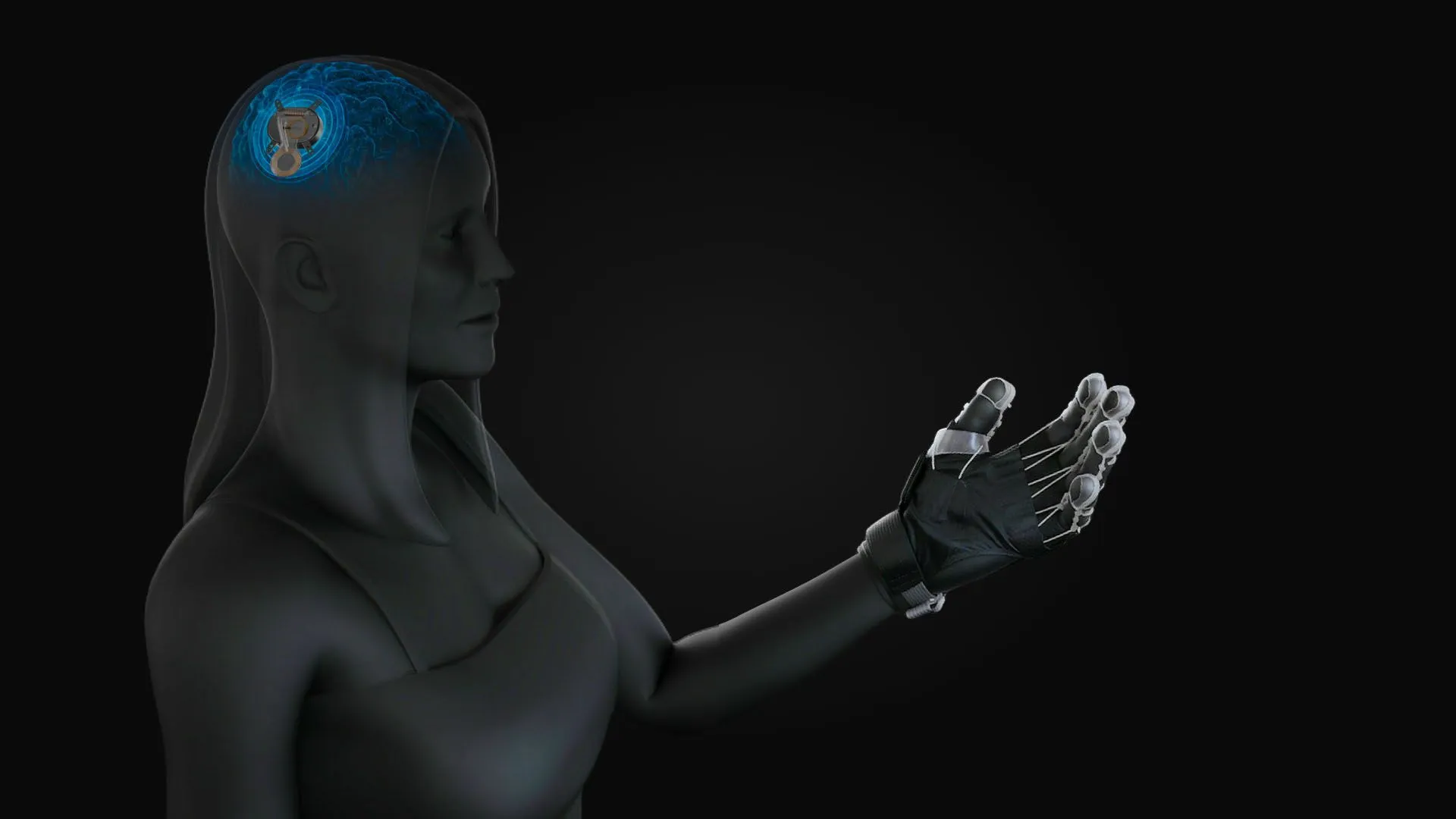
Epia Neuro is working on a brain-computer interface (BCI) that takes a different angle from what we usually see in the space. Instead of targeting communication or cursor control, this implant is designed specifically to help stroke patients recover movement in their hands.
The system pairs the implant with a motorized glove. The idea is that the BCI reads the patient's neural signals, then the glove assists with the actual physical movement. Over time, this feedback loop is meant to help the brain essentially rewire itself, rebuilding the motor pathways that were damaged by the stroke.
This is what's called neuroplasticity in action. After a stroke, the brain can sometimes reroute functions through undamaged areas, but it needs consistent, targeted stimulation to do it. That's where the implant and glove combination comes in, creating a bridge between intention and movement while the brain relearns the connection on its own.
It's worth noting how this fits into the broader BCI landscape. Most of the headlines in this space have gone to companies focused on paralysis or ALS, helping people type or control devices with their thoughts. Epia Neuro is betting that rehabilitation, not just assistance, is a massive and underserved use case.
Stroke is one of the leading causes of long-term disability worldwide. Hand function is particularly hard to recover because of how complex fine motor control is. Traditional physical therapy helps, but progress can plateau. A BCI that actively engages the brain during rehab could push past those limits.
For anyone watching the AI and neurotech space, this is a signal worth paying attention to. We're moving past the era where BCIs are purely experimental curiosities. Companies are now targeting specific clinical outcomes with paired hardware, combining what's happening inside the brain with mechanical support on the outside.
The big question, as always with implantable devices, will be the path through clinical trials and regulatory approval. But the approach itself, using a neural implant not just to read the brain but to actively help it heal, represents a meaningful shift in how we think about brain-computer interfaces.


