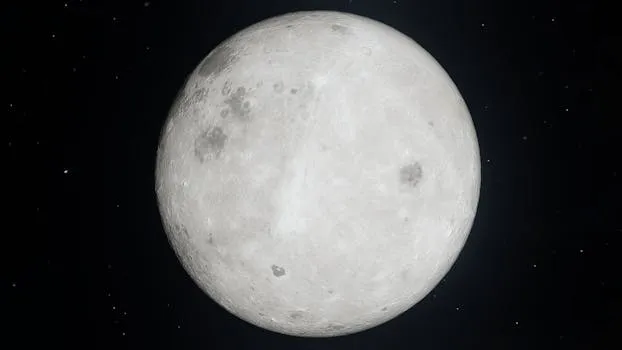
Artemis II just hit a major milestone. The spacecraft and its four-person crew have officially entered the Moon's sphere of influence, meaning lunar gravity is now the dominant force acting on the craft. That transition happened about 39,000 miles from the Moon, a little over four days into the mission.
The real headline moment comes tomorrow. Orion will loop around the far side of the Moon, pushing astronauts Reid Wiseman, Christina Koch, Victor Glover, and Canadian Space Agency astronaut Jeremy Hansen to 252,757 miles from Earth. That beats the Apollo 13 distance record by over 4,000 miles. These are also the first humans to cross the lunar threshold since Apollo 17 in 1972.
The crew has been busy prepping for the flyby, running manual piloting demonstrations, reviewing science objectives for a six-hour lunar observation window, and evaluating their space suits. Those suits aren't for a moonwalk on this mission. They're there for life support in case of emergency and for the trip home.
Orion is expected to reach the Moon's vicinity shortly after midnight on Monday, April 6. The lunar observation period kicks off at 2:45 PM ET, and a few hours after that, the crew will slip behind the Moon and briefly lose all communication with Earth. The closest approach to the lunar surface is scheduled for 7:02 PM ET, when the spacecraft will be just 4,066 miles from the Moon.
NASA says the crew will see the entire disk of the Moon at once from that distance, including regions near the north and south poles. They'll also get to witness something wild: a solar eclipse from space, as Orion, the Moon, and the Sun align so the astronauts watch the star disappear behind the Moon for about an hour.
Between the science and the navigation milestones, the crew has also had time to simply look out the window. The latest images from NASA show the astronauts gazing back at Earth through the Orion spacecraft's windows. Sometimes the view is the point.
So why does a Moon flyby matter to people building with AI and shipping products? Artemis II is a proof-of-concept mission for the entire Artemis program, which aims to establish a sustained human presence on and around the Moon. That kind of infrastructure eventually creates massive demand for autonomous systems, robotics, and AI-driven mission planning. The tools being tested now will shape the tech stack for deep space operations for decades. NASA's live coverage of the flyby starts at 1 PM ET if you want to watch history happen in real time.


