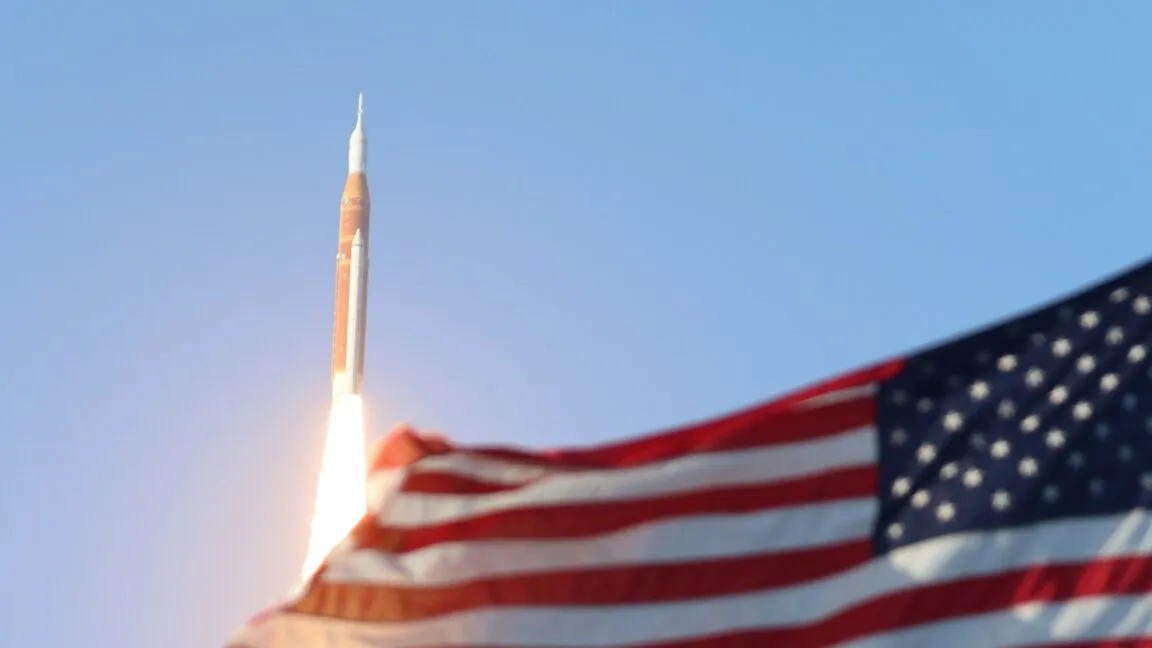
NASA's Artemis II mission is officially underway. On Wednesday evening, four astronauts launched from Kennedy Space Center in Florida aboard the Space Launch System rocket, beginning a nine-day journey around the Moon. It is the first time humans have traveled to the Moon since the Apollo era.
The crew includes three American astronauts and one Canadian. They lifted off at 6:35 pm EDT (22:35 UTC) from Launch Complex 39B, the same historic pad that has supported some of NASA's most ambitious missions.
The Space Launch System rocket stands 322 feet tall and weighs nearly 6 million pounds at liftoff. Four RS-25 engines fueled by hydrogen, combined with two solid rocket boosters, generated a combined 8.8 million pounds of thrust. That output surpasses even the legendary Saturn V rocket used during the Apollo program.
Spectators gathered miles away from the launch pad felt the moment viscerally. A wall of sound rolled across the Florida coast seconds after liftoff as the rocket climbed skyward, trailing a massive column of fire and smoke.
This mission matters because it represents NASA's first crewed flight beyond low Earth orbit in more than half a century. Artemis II is a critical stepping stone before Artemis III, which aims to land astronauts on the lunar surface. Success here validates the rocket, the Orion spacecraft, and the life support systems that will carry future crews to the Moon and eventually deeper into space.
For the broader space industry, Artemis II signals that large-scale human exploration is back on track after years of delays and budget challenges. It also strengthens international partnerships, with the Canadian Space Agency playing a direct role in the crew.
The mission is expected to last nine days, during which the crew will loop around the Moon before returning to Earth. All eyes now turn to the Orion capsule and its performance during the long trek through deep space.


