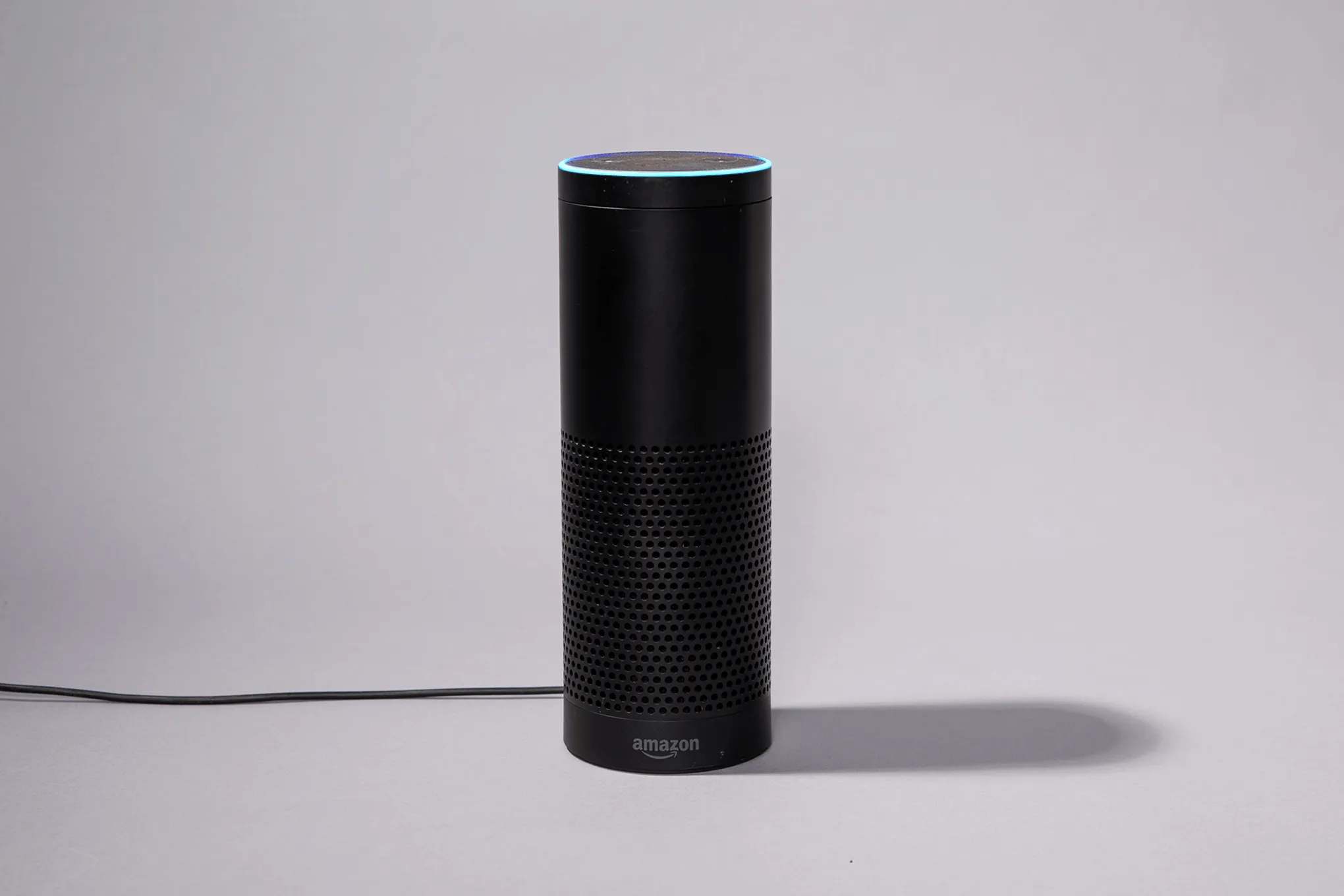
Jeff Bezos wanted a voice computer. Not quietly, not as some skunkworks side project. He was telling people about it publicly from the very early days of Amazon, convinced that talking to technology would feel more natural than tapping and typing. Of course, it also meant people could buy things from Amazon without lifting a finger.
That vision eventually became the Echo, but the path from "wouldn't it be cool if" to a working product was anything but straightforward. A team at Amazon took on the challenge of building something that could hear you across a noisy room, understand what you meant, and respond in a way that didn't make you want to throw it out a window.
What makes this story worth revisiting is the sheer ambition of the bet. At the time, voice assistants were either phone-bound like Siri or largely novelties. The idea of a standalone device that just sat in your kitchen waiting for a wake word was genuinely new territory for a consumer product.
Bezos wasn't just chasing a gadget. He was chasing a platform. Voice as an interface meant a new way to control smart homes, access information, and yes, shop. Every interaction was a data point, every command a chance to learn what customers actually wanted.
For anyone building AI-powered products today, the Echo's origin is a useful case study in conviction. The technology wasn't ready when the vision first formed. Natural language processing, far-field microphone arrays, cloud-based speech recognition. None of it was off the shelf. Amazon had to push multiple technical frontiers simultaneously.
That willingness to invest before the tech caught up is something we're seeing play out again right now with generative AI hardware. Companies are shipping devices built around large language models with the same bet Bezos made: the experience will improve fast enough to justify getting it into people's hands early.
The Echo didn't just teach Amazon how to build hardware. It taught the entire industry that voice could be a serious computing interface, not just a parlor trick. Every smart speaker, voice assistant, and ambient AI device that followed owes something to that original push.


