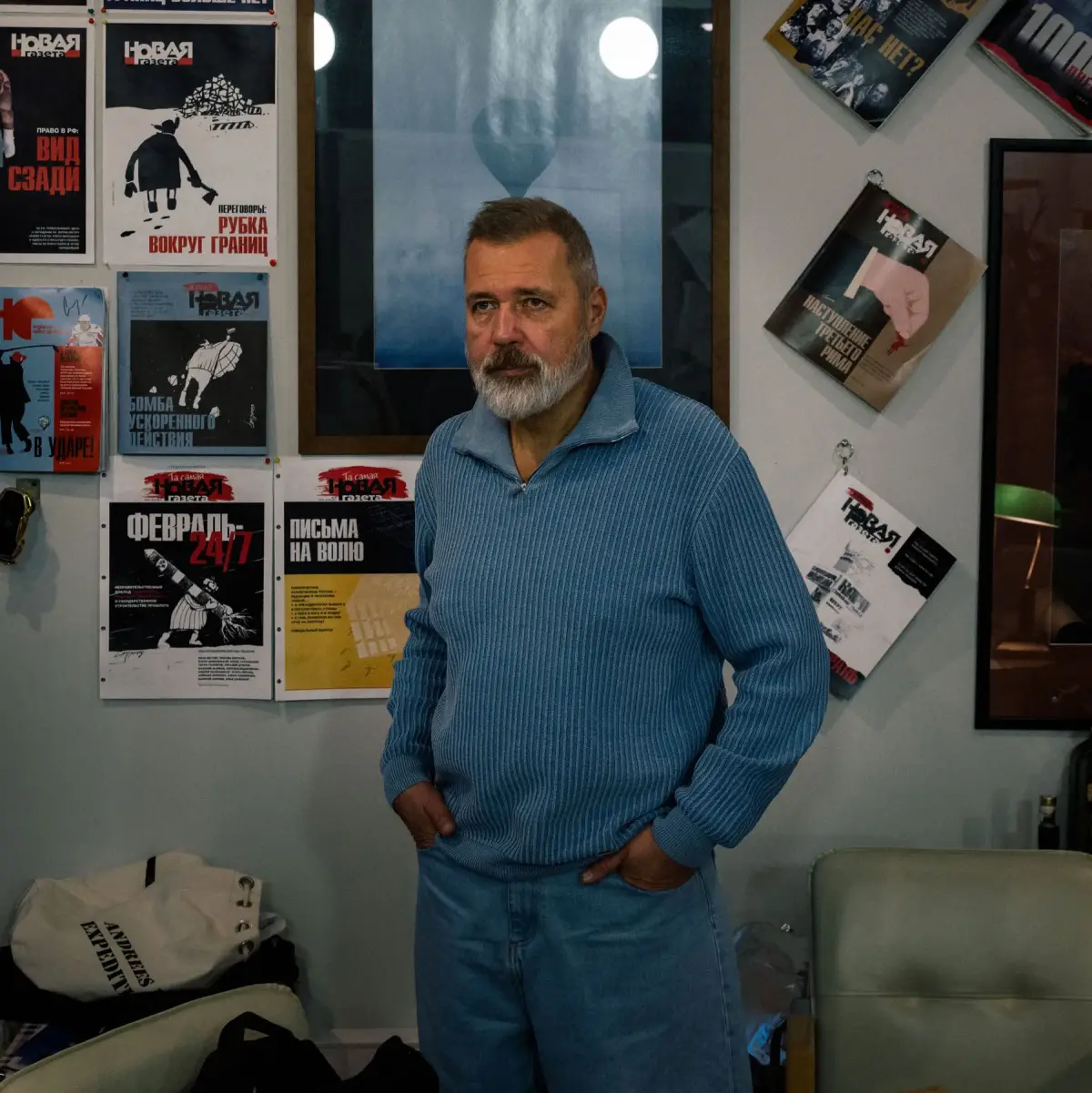
When Russia invaded Ukraine in 2022, hundreds of journalists made the difficult choice to flee the country. Nobel Peace Prize laureate Dmitri A. Muratov was not one of them.
Muratov stayed. And more importantly, he kept talking.
That distinction matters. In a media environment where dissent has been systematically crushed, choosing to remain inside Russia while continuing to speak freely is not just brave. It is extraordinarily rare.
While many of his peers relocated to operate from exile, Muratov's decision to stay puts him in a uniquely vulnerable position. Russia's crackdown on independent journalism has only intensified since the invasion, with new laws criminalizing what the government considers "false information" about the military.
For anyone watching the global information landscape, this story is a reminder of something easy to forget when we talk about AI tools, content generation, and the future of media. The foundation of all of it is people willing to report the truth under pressure. No algorithm replaces that.
Muratov's stance also highlights the widening gap between information environments. In some parts of the world, the challenge is filtering through too much content. In others, the challenge is having access to any independent reporting at all.
Whether you work in AI, media, or just care about the flow of reliable information, Muratov's refusal to go quiet is worth paying attention to. The tools we build are only as valuable as the information ecosystem they sit inside.


