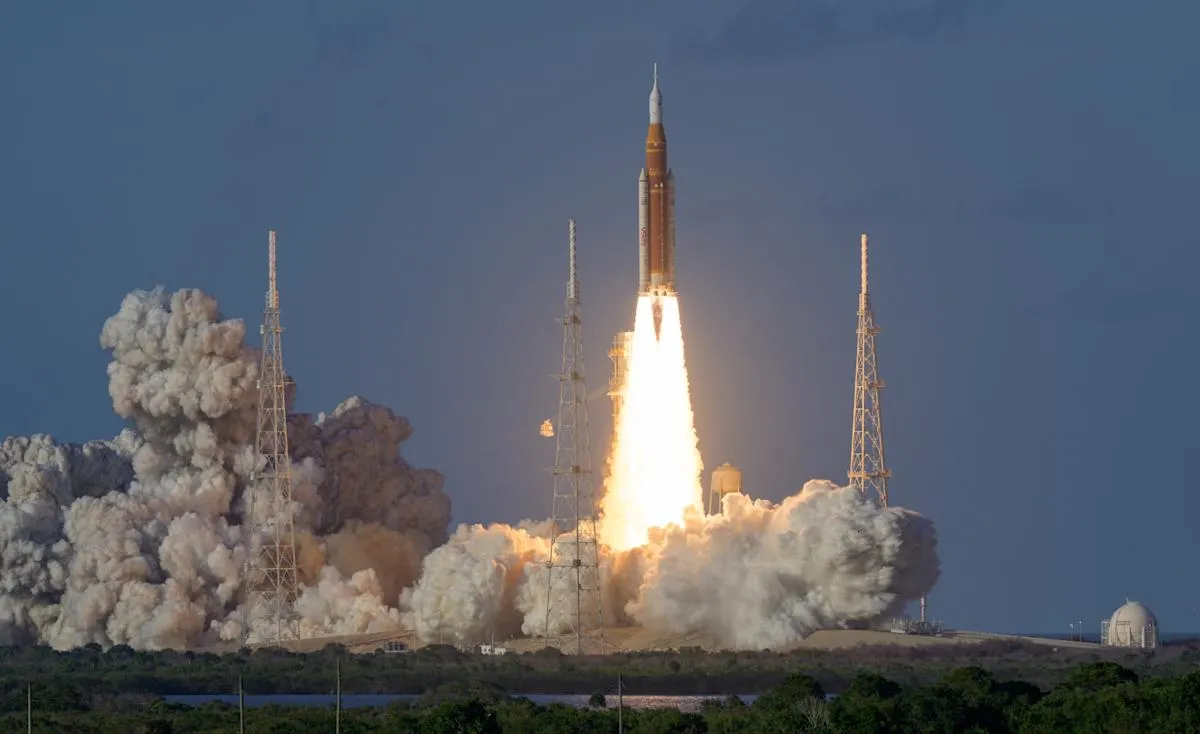
Artemis II is officially off the ground and headed for the moon. The mission launched on April 1 at 6:35pm Eastern from Kennedy Space Center's Launch Complex 39B, carrying NASA astronauts Reid Wiseman, Victor Glover, and Christina Koch alongside Canadian Space Agency astronaut Jeremy Hansen. This is the first crewed Artemis flight, and the first time humans have ventured into deep space since the Apollo program.
Let that sink in for a second. We haven't sent people beyond low Earth orbit in over 50 years. This mission is the real proof-of-concept for NASA's plan to return astronauts to the lunar surface, testing the Space Launch System rocket and Orion spacecraft with an actual crew for the first time.
Within hours of launch, the crew was already sharing stunning views of Earth. But not everything went smoothly. The astronauts reported a problem with their waste management system, which happens to be the first real toilet ever installed on a deep space mission. The backup plan? Old school waste collection bags, the same kind Apollo crews used. Sometimes proven tech is the best tech.
The mission hit a key milestone at 10:43pm Eastern when the Orion spacecraft successfully separated from the SLS rocket's upper stage. From there, astronaut Victor Glover took manual control of the capsule for proximity operations testing, demonstrating how Orion would maneuver and dock with future lunar landers being built by SpaceX and Blue Origin.
That docking capability is critical. The whole Artemis architecture depends on Orion being able to rendezvous with a lander in lunar orbit, so getting this right now sets the stage for everything that comes next.
The crew and their Orion capsule are expected to splashdown in the Pacific Ocean on April 10, wrapping up a 10-day journey that marks a major turning point for crewed space exploration.
For anyone in the AI and tech space, this is worth paying attention to. The engineering systems behind Artemis, from autonomous flight software to the testing frameworks for spacecraft maneuvers, represent some of the most complex system integration challenges on the planet. And the data coming back from this mission will feed into the planning tools and simulations that shape every future lunar mission.


