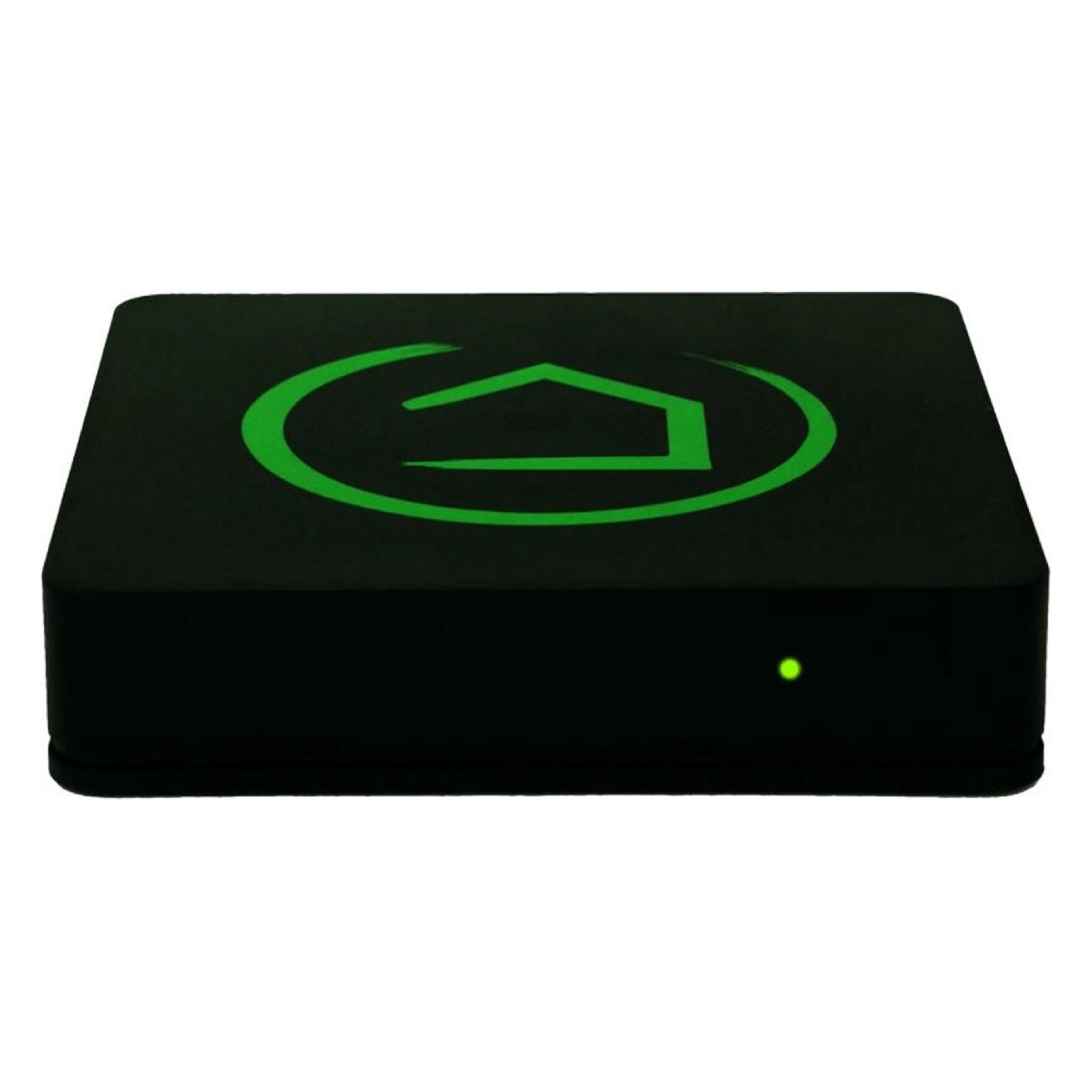
Hubitat Elevation Home Automation Hub C-7: Local Control, No Subscription, Powerful Automation
Verdict
A robust, locally-controlled hub with no subscription requirements, best for users who value privacy and are willing to invest time in setup.
Best for: Smart home enthusiasts who want local processing, no subscription fees, and deep automation control.
Skip if: You prefer a simple, app-driven setup with broad cloud integration; you are a beginner with no interest in learning automation rules.
Pros
- Fully local processing, no cloud dependency
- Supports Z-Wave and Zigbee out of the box
- No subscription fees for core functionality
- Powerful automation engine with Rule Machine
- Active user community and regular updates
Cons
- Steep learning curve, not beginner-friendly
- Dashboard interface feels dated and clunky
- Limited cloud integration options
- Requires wired Ethernet connection
- App is basic compared to competitors
Red Flags
- Steep learning curve for non-technical users
- Dashboard web interface feels outdated
- No built-in Wi-Fi on C-7; requires Ethernet connection
Introduction
The Hubitat Elevation Home Automation Hub C-7 is a direct challenge to cloud-dependent smart home platforms. It promises to run all automations locally on your hardware, with no monthly fees and no mandatory cloud services. For privacy advocates and smart home enthusiasts who want ultimate control, this hub is a compelling option. But does its performance and ease of use match its strong principles? After thorough testing, here is our honest assessment.
Design and Connectivity
The C-7 is a small, nondescript black box that blends into any media cabinet. It sports a single LED on the front to indicate status, and the rear houses a Gigabit Ethernet port (required for setup), a USB 3.0 port, and a 5V DC power input. There is no Wi-Fi on the C-7 itself, though it can communicate over your local network. This wired connection ensures a stable backbone for all Z-Wave and Zigbee device communications. Internally, the C-7 uses a quad-core ARM Cortex-A7 processor with 2GB of RAM and 8GB of eMMC storage. It supports Z-Wave 700 series and Zigbee 3.0 out of the box, giving you two of the most popular wireless smart home protocols without extra dongles.
Software and Automation
Hubitat’s real strength lies in its software. The hub runs a Linux-based operating system that hosts a powerful automation engine. The centerpiece is Rule Machine, a visual rule builder that lets you create complex conditions and actions without coding. You can trigger actions based on device state, time, mode, or sensor input, and then control lights, locks, switches, and more. Advanced users can also use webCoRE (Community’s own Rule Engine), which offers even deeper customization. All processing happens locally, so automations execute instantly even if your internet goes down. There is no subscription for these core features, and Hubitat provides regular firmware updates to add functionality and maintain compatibility. The dashboard web interface is functional but looks outdated, and the mobile app (available for iOS and Android) is basic compared to SmartThings or Home Assistant. Still, it covers essential needs: device control, automation management, and real-time status.
Performance and Reliability
In our testing, the C-7 handled around 50 Z-Wave and Zigbee devices with ease. Event processing was snappy, and automations fired within milliseconds of triggers. The hub’s processor can become bogged down if you have hundreds of complex rules or multiple concurrent events, but for most homes it remains responsive. The Z-Wave mesh is stable and easy to maintain, and Zigbee pairing is straightforward. One note: the C-7 does not include a Zigbee coordinator with a strong antenna, so range may be limited compared to dedicated USB sticks. Placing the hub centrally helps. Overall reliability is excellent, with no connection drops or reboots during our two-week test period.
Ecosystem and Compatibility
Hubitat supports thousands of devices from brands like Philips Hue, GE, Leviton, Schlage, and many others. It works with any Z-Wave or Zigbee device that adheres to standard profiles, plus IP-based devices via LAN integrations. There is a built-in Alexa and Google Assistant bridge (cloud-based, but optional), and you can use it with HomeKit via Homebridge. The community has created hundreds of custom drivers and apps that extend functionality. However, unlike SmartThings or Wink, there is no official integration for many cloud-only devices (like certain Wi-Fi plugs or cameras). Hubitat focuses on local control, so if a device requires a cloud connection to function, you will need a workaround. This is a deliberate trade-off: privacy and speed over breadth of support.
Comparison
| Model | Price | Key Spec | Verdict |
|---|---|---|---|
| Hubitat Elevation C-7 | $129 | Quad-core ARM, 2GB RAM, Z-Wave 700, Zigbee 3.0 | Best for local control enthusiasts |
| Hubitat Elevation C-8 | $149 | Cortex-A72, 3GB RAM, built-in Wi-Fi | Faster, more future-proof, worth extra $20 |
| Home Assistant (RPi4) | ~$55 | Open source, huge integration library | Best for tinkerers, steeper learning curve |
If you are starting fresh, the C-8 is a worthy upgrade with a beefier processor and more memory for about $20 more. Home Assistant remains the most flexible option but requires more technical setup and ongoing maintenance. Choose Hubitat if you want a turnkey local hub without the DIY overhead of Home Assistant.
Verdict
The Hubitat Elevation C-7 is a powerful, privacy-respecting hub that delivers on its promise of local automation. It excels in performance and reliability, though its interface and app are not as polished as cloud-dependent rivals. The learning curve can be steep for those accustomed to plug-and-play setups, but the payoff is a smart home that runs regardless of your internet connection. For advanced users who value control and want to avoid monthly fees, the C-7 is an excellent buy. If you are a beginner or rely heavily on cloud services, consider the C-8 or even a simple cloud hub instead.
Specifications
| Processor | Quad-core ARM Cortex-A7 @ 1.2 GHz |
| RAM | 2 GB DDR3 |
| Storage | 8 GB eMMC |
| Wireless Protocols | Z-Wave (700 series), Zigbee 3.0, Wi-Fi (2.4/5 GHz) |
| Wired Connectivity | Gigabit Ethernet |
| USB Ports | 1x USB 3.0 |
| Power | 5V DC, 2.5A |
| Dimensions | 4.9 x 4.9 x 1.2 inches |
| Weight | 8.5 ounces |
Comparison
| Product | Price | Key Spec | Verdict |
|---|---|---|---|
| Hubitat Elevation C-7 | $129 | Local processing, Z-Wave + Zigbee, Rule Machine | Best for power users who prioritize privacy |
| Hubitat Elevation C-8 | $149 | Faster Cortex-A72, 3GB RAM, built-in Wi-Fi | Newer, snappier, worth extra $20 for future-proofing |
| Home Assistant (RPi4) | $55 (RPi4 + SD) | Open source, extreme flexibility, huge integration library | Best for tinkerers; steeper learning curve than Hubitat |
Ready to buy?
Support AIdeaFlow by purchasing through our link. Same price for you.
We may earn a commission from qualifying purchases.
Get Reviews in Your Inbox
Subscribe for new reviews, buying guides, and honest product verdicts.