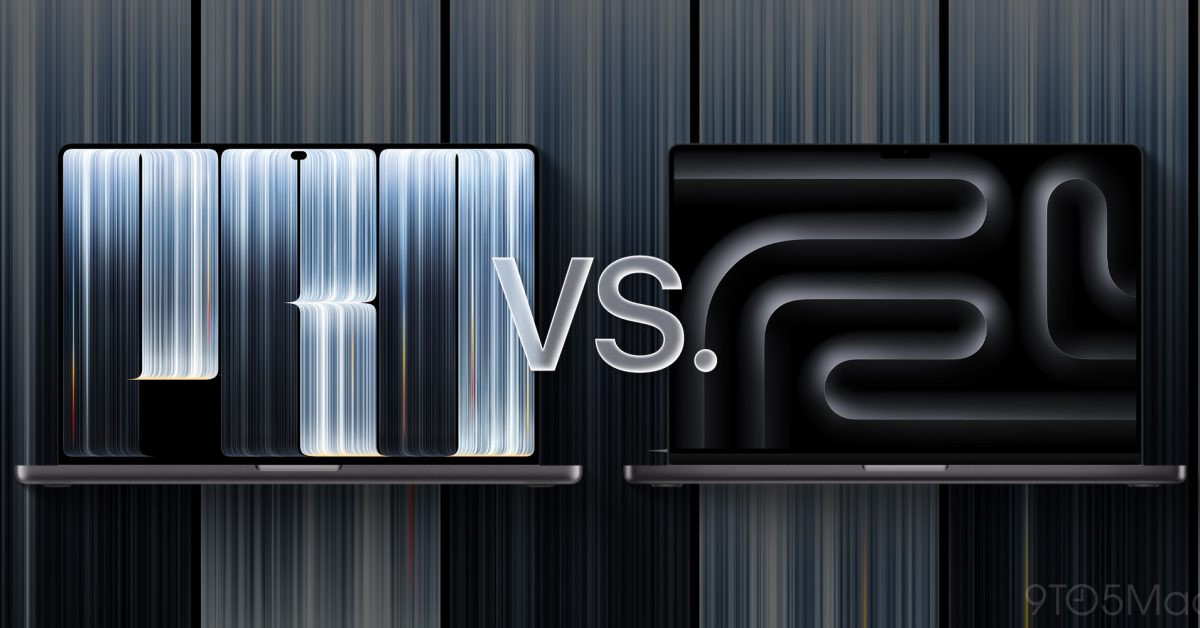
MacBook Pro PROLED XDR: Apple Finally Adds Touch, But Is the $2,899 Price Justified?
Verdict
The display and design are exceptional, but the high entry price and limited touch utility make it a luxury upgrade rather than a necessity for most users.
Best for: Visual professionals, video editors, and photographers who need a high-quality touchscreen display
Skip if: Developers, writers, or budget-conscious users who do not need touch input
Pros
- Stunning 2,000-nit tandem OLED display with perfect blacks
- First-ever touchscreen MacBook with optimized macOS gestures
- Significantly lighter and thinner chassis than previous generations
- M5 Pro and M5 Max chips offer top-tier performance
Cons
- High starting price of $2,899 for the 14-inch model
- Touch interface is still limited compared to iPadOS
- Standard M5 models offer similar performance without the premium
- No significant performance jump over last year's M4 models for non-display tasks
Red Flags
- High starting price may not be justified for non-visual professionals
- Touch interface support is still limited across macOS apps
- No performance advantage over standard M5 models
The Long-Awaited Touchscreen Mac Arrives
Apple has officially ended the rumor mill. The MacBook Pro with PROLED XDR is here, marking the first time a MacBook features a touchscreen. For over a decade, Apple insisted that touch belonged on iPhones and iPads, not laptops. Now, with macOS 27 introducing touch optimizations, the company is asking professionals to reconsider. This isn't just a spec bump. It is a fundamental shift in how Apple envisions interaction with its most powerful laptop line. The question is whether the new tandem OLED display and touch interface justify the massive price tag, or if you are better off sticking with the standard M5 models.
Design: Thinner, Lighter, and Iconic
The industrial design has received its first major overhaul since 2021. Apple has managed to make the PROLED XDR models significantly lighter and thinner than their predecessors. The 14-inch model weighs just 3.0 pounds, down from 3.5 pounds in the previous generation. The 16-inch model drops to 4.0 pounds from 4.7 pounds. This reduction in weight is immediately noticeable and makes the laptop much more portable for creatives on the go. Apple has also brought back the glowing Apple logo on the lid, a nostalgic touch that adds a premium feel. The new hinge design offers greater stability, addressing a minor complaint from earlier generations. Despite the thinner chassis, the build quality remains rigid and premium, with no flex in the keyboard deck.
Display: The Star of the Show
The PROLED XDR display is the headline feature, and for good reason. Apple calls it the world's best laptop display, and the tandem OLED technology backs up that claim. You get perfect blacks, infinite contrast, and a peak brightness of 2,000 nits, a significant jump from the 1,600 nits of the Mini-LED panels in standard models. The color accuracy is reference-grade, making this ideal for video editors, photographers, and graphic designers who need precise color reproduction. The 14.2-inch and 16.3-inch panels are nearly identical in size to the standard models, ensuring that your workflow remains familiar. The touch capability is the real differentiator. While macOS is not iPadOS, Apple has implemented a suite of touch gestures that feel natural. Scrolling, zooming, and navigating the timeline in Final Cut Pro or DaVinci Resolve becomes more intuitive. However, it is important to note that not all apps support touch input yet. The experience is polished where it matters, but it is not a full tablet replacement.
Performance: M5 Pro and M5 Max
Under the hood, the PROLED XDR models use the same M5 Pro and M5 Max chips found in the standard MacBook Pros. This means you are not paying for a performance leap in raw compute power. The M5 Pro handles heavy multitasking and 4K video editing with ease, while the M5 Max is a beast for 8K workflows and complex 3D rendering. If your primary concern is rendering speed, the standard M5 models offer the same performance at a lower price. The PROLED XDR is about the experience, not the speed. The unified memory architecture ensures that large datasets stay close to the CPU and GPU, reducing bottlenecks. Battery life remains impressive, lasting up to 18 hours on the 14-inch model, which is crucial for professionals working away from outlets.
Price: The Elephant in the Room
U.S. pricing starts at $2,899 for the 14-inch model and $3,399 for the 16-inch model. This is a significant premium over the standard M5 models, which start at $1,999 and $2,499 respectively. You are paying roughly $900 to $900 extra for the OLED display and touch interface. For many users, this is a hard sell. The standard Mini-LED displays are still excellent, and the lack of touch is a non-issue for keyboard-centric workflows. However, for visual professionals who benefit from direct manipulation and the superior contrast of OLED, the premium may be worth it. The price also reflects the cost of the new tandem OLED technology, which is currently more expensive to manufacture than Mini-LED.
Alternatives to Consider
If the price tag gives you pause, there are alternatives. The standard MacBook Pro M5 Pro offers 90% of the experience for 70% of the price. If you need a touchscreen, the Dell XPS 16 provides a comparable OLED touch experience with Intel Core Ultra chips, often at a lower price point. For those who want a tablet-like experience, the iPad Pro with the Magic Keyboard is a more affordable option, though it lacks the full desktop macOS environment. The choice ultimately depends on how much you value touch interaction and display quality over raw performance and cost.
Who Should Buy This?
The MacBook Pro PROLED XDR is best for visual professionals who need the highest quality display and find touch input useful for their workflow. Video editors, photographers, and designers will appreciate the color accuracy and brightness. If you are a developer or writer, the standard M5 models are likely a better value. The PROLED XDR is a luxury upgrade, not a necessity for most users.
Final Verdict
Apple has delivered a stunning laptop with the PROLED XDR. The display is unmatched, the design is sleek, and the touch interface is a welcome addition. However, the high price and limited touch utility make it a niche product. It is a brilliant device for those who can afford it and need the specific features it offers. For everyone else, the standard M5 models remain the smarter buy.
Specifications
| Display | 14.2-inch or 16.3-inch Tandem OLED, 2,000 nits peak, Touch-enabled |
| Processor | Apple M5 Pro or M5 Max |
| RAM | 24GB to 128GB Unified Memory |
| Storage | 512GB to 8TB SSD |
| Weight | 3.0 lbs (14-inch), 4.0 lbs (16-inch) |
| Starting Price | $2,899 (14-inch), $3,399 (16-inch) |
Comparison
| Product | Price | Key Spec | Verdict |
|---|---|---|---|
| MacBook Pro PROLED XDR | $2,899 | 2,000-nit OLED Touch | Best for visual pros |
| MacBook Pro M5 Pro | $1,999 | Mini-LED, No Touch | Best value for power |
| Dell XPS 16 (2026) | $2,499 | OLED Touch, Intel Core Ultra | Best Windows alternative |
Sources
Ready to buy?
Support AIdeaFlow by purchasing through our link. Same price for you.
We may earn a commission from qualifying purchases.
Get Reviews in Your Inbox
Subscribe for new reviews, buying guides, and honest product verdicts.