OneXPlayer 3: Intel Arc G3 Extreme Powers the First True Modular Gaming Handheld
Verdict
Genuinely innovative modular design and strong GPU power, but the premium price and Intel Arc's emulation immaturity make it a hard sell over proven AMD handhelds.
Best for: Early adopters who want cutting-edge Intel Arc hardware, prioritize screen quality over price, and value the modular laptop mode for productivity on the go.
Skip if: You care about emulation compatibility, want proven AMD drivers, need portability under 700g, or cannot justify spending $1,399+ when the ROG Ally X exists at $799.
Pros
- First Intel Arc G3 Extreme handheld with RTX 4050-class graphics
- Genuine 3-in-1 modular design with detachable controllers and magnetic keyboard
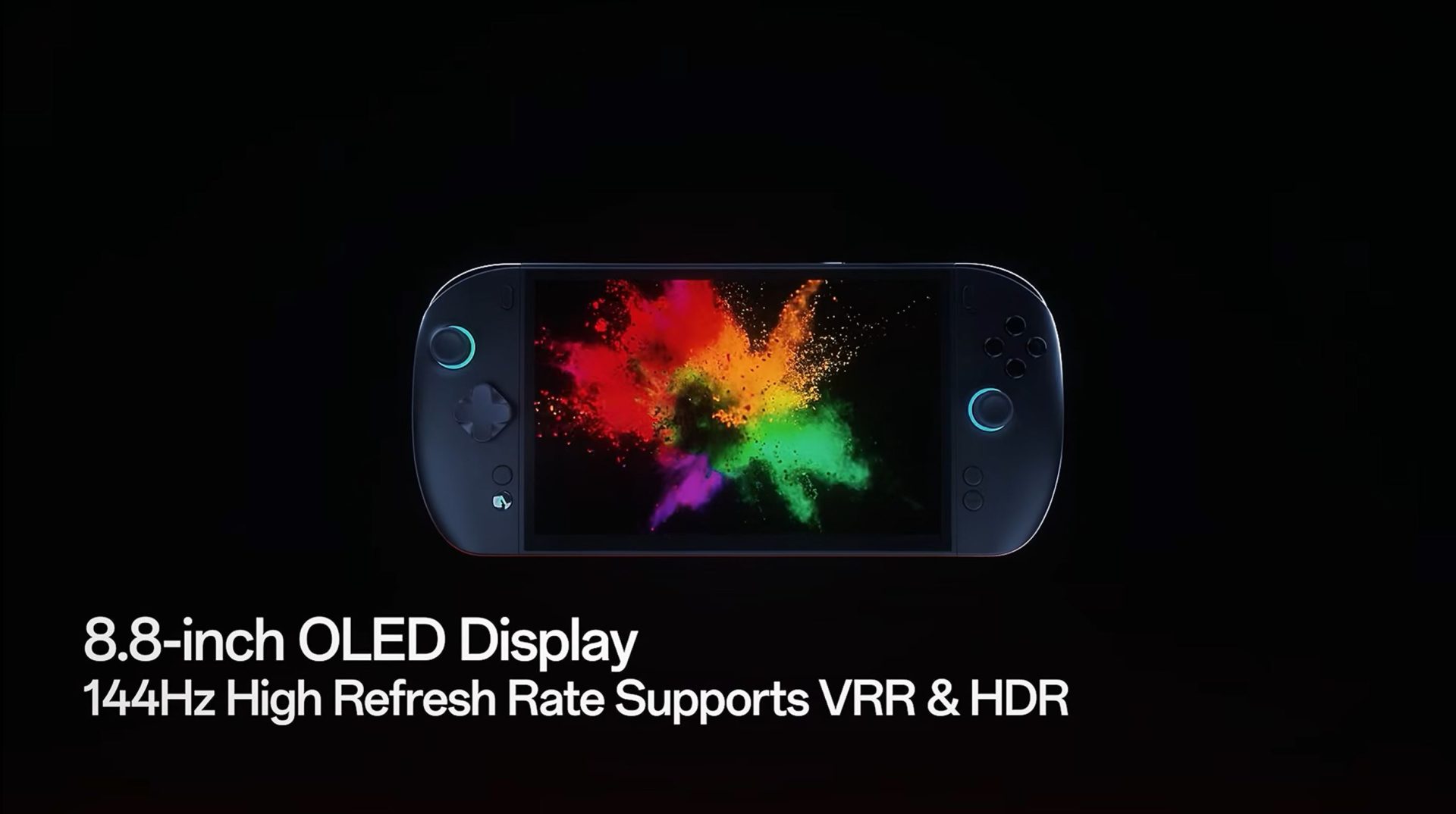
- Gorgeous 8.8-inch 144Hz AMOLED with HDR and 100% DCI-P3
- Massive 85Wh battery for extended play sessions
- Up to 32GB RAM handles demanding emulation and multitasking
Cons
- Very expensive at $1,399+, roughly twice an ROG Ally X
- Intel Arc GPU drivers still trail AMD for emulation, RPCS3 not recommended
- Heavy at 950g, needs a bag and two-handed use
- Full Windows 11 overhead requires driver management and power tuning
- Modular accessories add cost and more pieces to carry
Red Flags
- Intel Arc emulation support still immature, RPCS3 explicitly not recommended
- Price nearly twice that of proven AMD alternatives like ROG Ally X
- Memory speed varies by config, 24GB models use slower RAM
Intel's Arc G3 Gamble in Handheld Form
The OneXPlayer 3 is the first shipping handheld built around Intel's Arc G3 Extreme chip, and that alone makes it noteworthy. Intel claims performance comparable to a laptop RTX 4050, backed by 14 CPU cores and 12 Xe3 GPU cores fabbed on the company's 18A Panther Lake process. Independent testing suggests those claims hold water for modern PC games. The question is whether that raw power justifies a $1,399 starting price in a market where the ROG Ally X delivers proven AMD Z1 Extreme performance for roughly half that.
OneXPlayer's pitch is versatility. The detachable controllers magnetically snap off, turning the handheld into a tablet. Add the included magnetic keyboard, and it becomes a compact Windows laptop. On paper, it is a three-device convergence play. In practice, it adds bulk, complexity, and more pieces to carry. The modular design is clever, but most users will pick one mode and stick with it.
That OLED Screen Is Legitimately Excellent
The 8.8-inch AMOLED panel is the standout hardware win. It runs at 1920×1200 resolution with a 144Hz refresh rate, VRR support, HDR, and 100% DCI-P3 color coverage. Peak brightness hits 1100 nits, making it usable outdoors. Compared to the 7-inch IPS panels on most competitors, this is a clear upgrade. Games look punchy, emulation shines, and the extra screen real estate makes PC titles with dense UIs more readable.
The tradeoff is battery life. OLED sips less power at low brightness, but running modern games at 144Hz on an 8.8-inch display drains the 85Wh battery faster than you might expect. OneXPlayer claims 3-4 hours of gaming, which aligns with user reports. That is respectable given the hardware, but the Steam Deck OLED stretches further on a smaller battery by running less demanding titles at lower settings.
| Spec | OneXPlayer 3 | ROG Ally X | Steam Deck OLED |
|---|---|---|---|
| Display | 8.8" OLED 144Hz | 7" IPS 120Hz | 7.4" OLED 90Hz |
| GPU | Arc G3 Extreme | AMD Z1 Extreme | AMD APU |
| Battery | 85Wh | 80Wh | 50Wh |
| Price | $1,399+ | ~$799 | $549 |
Intel Arc and the Emulation Problem
Here is where OneXPlayer's choice of Intel Arc creates friction. For modern PC games on Steam, Epic, or Game Pass, the Arc G3 Extreme performs well. Early benchmarks show it handling AAA titles at medium to high settings with playable framerates. But if you bought a handheld expecting to emulate PS3, Wii U, or Switch, Intel Arc's driver maturity is a real concern.
The RPCS3 project explicitly lists Intel graphics as not recommended. RetroArch and Dolphin work, but users report more shader compilation stutters and compatibility quirks compared to AMD's RDNA graphics, which have years of emulation community optimization behind them. Intel is improving Arc drivers quickly, but for now, AMD handhelds simply work better for emulation without troubleshooting.
Modular Design: Clever but Niche
The detachable Hall-effect controllers resist drift and include capacitive touchpads with two-stage triggers. They work well, but the modular concept adds weight. At 950g, the OneXPlayer 3 is substantially heavier than a Steam Deck (669g) or ROG Ally X (678g). This is not a device you hold one-handed or slip into a jacket pocket. It needs a bag, and the keyboard accessory adds more bulk.
The magnetic keyboard turns the device into a compact laptop, which is genuinely useful if you plan to use it for productivity on the go. But most buyers want a gaming handheld first, and the modular design feels like solving a problem most users do not have. The ROG Ally X pairs with a Bluetooth keyboard just fine without the added complexity.
Windows 11 Overhead
Full Windows 11 gives you every launcher, EmuDeck, and standalone emulator without restriction. It also gives you automatic updates, driver management, and power tuning. The OneXPlayer 3 ships with utilities to manage TDP and fan curves, but you are still babysitting a Windows PC. SteamOS on the Steam Deck hides that complexity, and while it limits you to Steam and Proton-compatible titles, it delivers a cleaner handheld experience.
Memory Configuration Quirk
The 24GB RAM configs use slower LPDDR5X-7467 memory, while the 32GB model runs faster. If you are targeting demanding PS3 or Switch emulation, the 32GB config is the one to get, but it pushes the price to $1,699. That is flagship ultrabook money for a gaming handheld.
Who This Is For
The OneXPlayer 3 is for early adopters who want the newest Intel silicon and value the modular laptop mode enough to justify the price premium. It is also for users who prioritize screen quality and do not plan heavy emulation workloads. If you mainly play modern PC games and want a gorgeous OLED with strong GPU performance, this delivers.
Who Should Skip It
If you care about emulation, value, or portability, buy an ROG Ally X or Steam Deck OLED instead. The Ally X costs half as much, weighs less, and has mature AMD drivers. The Steam Deck OLED is even cheaper, has a refined interface, and works flawlessly for Steam games. The OneXPlayer 3 is not bad, it is just overpriced for what most handheld buyers actually need.
Specifications
| Processor | Intel Arc G3 Extreme (14-core, 18A Panther Lake) |
| GPU | 12 Xe3 GPU cores (Arc B390-class) |
| Display | 8.8" OLED, 1920×1200, 144Hz VRR, HDR, 1100 nits |
| RAM | Up to 32GB LPDDR5X (24GB uses slower 7467MT/s) |
| Battery | 85Wh |
| Weight | ~950g |
| Storage | Mini SSD slot, expandable |
| Connectivity | USB4, full Windows 11 |
| Price | $1,399 / $1,499 / $1,699 |
Comparison
| Product | Price | Key Spec | Verdict |
|---|---|---|---|
| OneXPlayer 3 | $1,399+ | Arc G3 Extreme, 8.8" OLED, modular | Interesting |
| ROG Ally X | ~$799 | AMD Z1 Extreme, 7" IPS, 80Wh | Buy |
| Steam Deck OLED | $549 | AMD APU, 7.4" OLED, SteamOS | Buy |
Sources
Get Reviews in Your Inbox
Subscribe for new reviews, buying guides, and honest product verdicts.