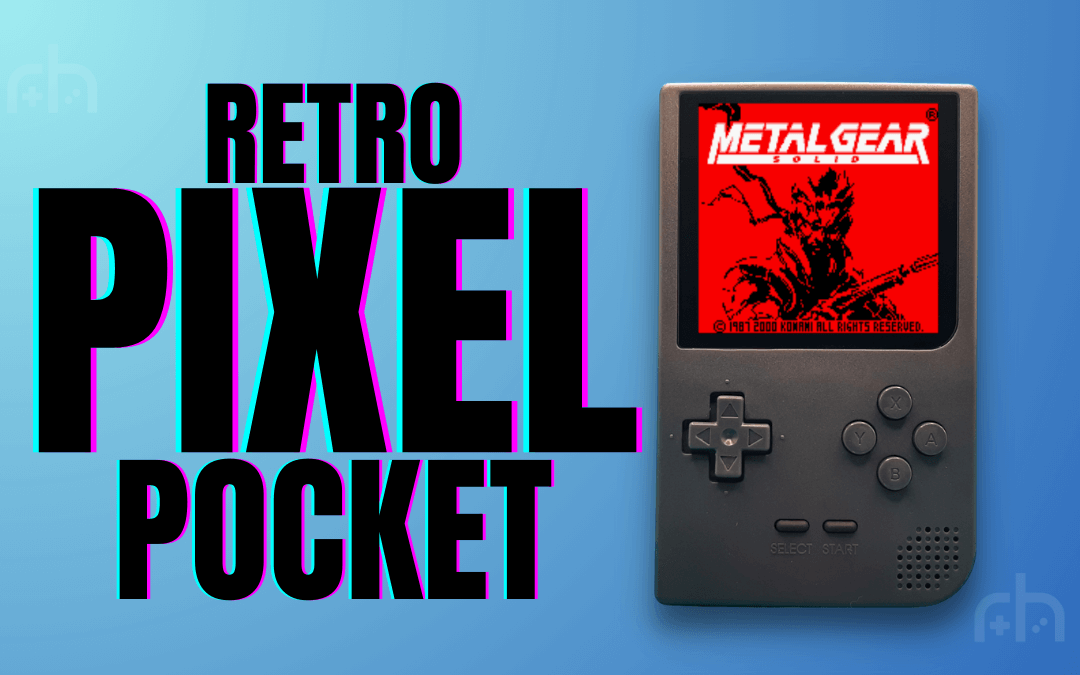
Retro Pixel Pocket V2: A $50 Game Boy Shell with a Rockchip RK3326 Chipset
Verdict
An excellent budget retro handheld for 2D emulation that delivers solid performance in a classic form factor.
Best for: Retro gaming purists who love the Game Boy Pocket form factor and primarily play 2D games.
Skip if: You need analog controls for 3D emulation or want a larger screen.
Pros
- Rockchip RK3326 offers significant performance uplift over the original Allwinner A64
- Authentic Game Boy Pocket silhouette with a true 1:1 aspect ratio screen
- Runs EmuELEC Linux, providing a stable and focused retro gaming experience
- Extremely affordable at $49.99
Cons
- Limited to 1GB DDR3 RAM, restricting complex emulation
- No analog stick, which limits control options for certain emulators
- Battery life is average due to the older chipset architecture
- Build quality feels plasticky compared to higher-end alternatives
Red Flags
- 1GB RAM limits complex emulation
- No analog stick restricts control options
The Retro Pixel Pocket V2: Nostalgia Meets Modern Budget Power
FunnyPlaying has carved out a niche in the retro handheld market by focusing on high-quality Game Boy modding parts. Their latest venture, the Retro Pixel Pocket V2, takes that expertise and applies it to a complete, standalone device. Launched at a sub-$50 price point, this handheld is designed to capture the essence of the original Game Boy Pocket while running modern emulation software. After spending time with the device, it is clear that FunnyPlaying has made some critical hardware upgrades that transform this from a niche curiosity into a viable budget gaming device.
Hardware Upgrades: From Allwinner to Rockchip
The original Retro Pixel Pocket, released in 2023, suffered from an outdated Allwinner A64 chipset and a bloated Android 7.1 interface. The V2 revision addresses these pain points directly. The core upgrade is the switch to the Rockchip RK3326 quad-core processor. This is the same chip found in many popular budget Android TV boxes and other retro handhelds like the Miyoo Mini Plus. The result is a snappier interface, faster boot times, and significantly better emulation performance for systems up to the PlayStation 1 era, particularly for 2D titles.
The display remains a 3.0-inch IPS panel with a 720x720 resolution. This square aspect ratio is not just a aesthetic choice; it is a functional one. It provides a true 1:1 pixel mapping for Game Boy, Game Boy Color, and Game Boy Advance games. Unlike widescreen handhelds that require letterboxing or stretching, the Retro Pixel Pocket V2 renders these classics exactly as they were intended. The screen quality is decent for the price, with acceptable viewing angles and brightness levels, though it does not match the vibrancy of premium OLED panels found in higher-end devices.
Design and Build Quality
The device leans heavily into its heritage. The casing is a faithful recreation of the Game Boy Pocket's vertical, pocketable silhouette. It features minimal buttons, no analog sticks, and a D-pad that feels responsive and accurate. The build quality is typical for this price segment. It is made of plastic, and while it feels sturdy enough for daily use, it lacks the premium heft of devices like the Analogue Pocket or the Steam Deck. The USB-C port is conveniently located at the bottom, and the WiFi antenna provides stable connectivity for ROM transfers and online leaderboards.
One notable omission is the analog stick. For a device focused on 2D retro gaming, this is a minor inconvenience. However, it does limit the device's versatility when emulating systems that benefit from analog control, such as the Nintendo 64 or certain PlayStation titles. If you are strictly playing 2D platformers and RPGs, the D-pad is perfectly adequate. For more complex 3D games, the lack of analog input becomes a significant hurdle.
Software and Emulation Performance
The V2 runs EmuELEC, a Linux-based operating system optimized for retro gaming. This is a stark improvement over the original's Android build. EmuELEC is lightweight, fast, and provides a clean, console-like interface. It supports a wide range of emulators out of the box, including RetroArch cores for various systems. The setup process is straightforward, with most configurations handled automatically. Users can easily add ROMs via USB-C or WiFi transfer.
In terms of performance, the RK3326 handles 2D systems flawlessly. Game Boy, Game Boy Color, Game Boy Advance, NES, SNES, and Sega Genesis titles run at full speed with accurate audio and video. The 1:1 screen makes these games look crisp and authentic. For 3D systems, the device is more limited. It can run some PlayStation 1 games, but performance is inconsistent. Titles with heavy 3D polygons or complex textures may experience slowdowns or frame drops. It is not a device for playing 3D platformers or fast-paced 3D shooters. It is best suited for 2D emulation and light 3D gaming.
Value and Competition
At $49.99, the Retro Pixel Pocket V2 is competitively priced. It undercuts many of its rivals while offering similar or better performance for 2D gaming. The closest competitor is the Miyoo Mini Plus, which also uses the RK3326 but includes an analog stick and a slightly larger screen. The Miyoo Mini Plus is a more versatile device, but it lacks the authentic Game Boy Pocket form factor. If you prioritize the classic look and 1:1 screen, the Retro Pixel Pocket V2 is the better choice. If you want more control options and a slightly larger display, the Miyoo Mini Plus is worth the extra $20.
Another alternative is the Anbernic RG351V, which offers a touchscreen and a different button layout. The RG351V is more versatile but lacks the nostalgic charm of the Retro Pixel Pocket. For purists who want a device that looks and feels like a classic Game Boy, the V2 is hard to beat at this price point.
Final Verdict
The Retro Pixel Pocket V2 is a successful evolution of its predecessor. By swapping the outdated Allwinner A64 for the Rockchip RK3326, FunnyPlaying has created a device that is fast, reliable, and capable of running a wide range of retro games. The 1:1 screen is a standout feature for Game Boy enthusiasts, providing an authentic gaming experience. While it lacks the power for heavy 3D emulation and the versatility of devices with analog sticks, it excels at what it was designed to do. For $50, it is an excellent value for anyone looking to relive their childhood gaming memories in a modern, pocketable package.
Specifications
| Chipset | Rockchip RK3326 |
| RAM | 1 GB DDR3 |
| Storage | 8 GB eMMC |
| Display | 3.0 inch IPS, 720x720 resolution |
| Battery | 3000 mAh |
| OS | EmuELEC (Linux) |
| Connectivity | USB-C, WiFi |
Comparison
| Product | Price | Key Spec | Verdict |
|---|---|---|---|
| Retro Pixel Pocket V2 | $50 | RK3326, 1:1 Screen | Best for GB purists |
| Miyoo Mini Plus | $69 | RK3326, Analog Stick | Better all-rounder |
| Anbernic RG351V | $55 | RK3326, Touchscreen | More versatile controls |
Sources
- https://retrohandhelds.gg/rh-reviews-the-retropixel-pocket/
- https://www.notebookcheck.net/Retro-Pixel-Pocket-Funnyplaying-upgrades-Game-Boy-retro-gaming-handheld-lookalike-while-dropping-to-sub-50-launch-price.1118070.0.html
- https://pocket-gaming.org/device/funny-playing-funny-playing-retro-pixel-pocket/
Get Reviews in Your Inbox
Subscribe for new reviews, buying guides, and honest product verdicts.