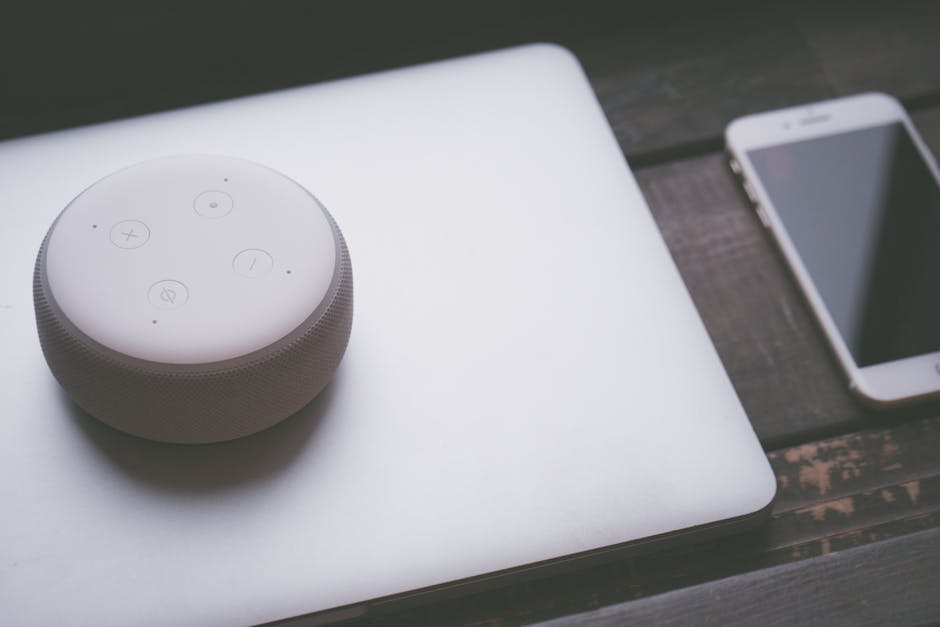
Tiiny AI Pocket Lab Review: Honest Analysis of the $1,399 Local AI Device
Verdict
Compelling technology held back by Kickstarter delivery risk and unclear real-world performance benchmarks.
Best for: Early-adopter developers seeking privacy-first AI compute, professionals with genuine portability requirements, researchers willing to accept delivery risk for potentially novel ARM AI performance data, and enthusiasts with disposable income who want to support ARM-based AI hardware development.
Skip if: You need AI hardware immediately, require proven performance benchmarks before purchasing, are on a tight budget with no margin for Kickstarter failure, need guaranteed software framework support, depend on CUDA ecosystem tools, or work in enterprise environments requiring vendor accountability and warrantied hardware.
Pros
- Genuinely impressive power efficiency at 30W versus 800W+ for comparable GPU solutions
- 80GB LPDDR5X RAM enables running large 100B+ parameter models locally
- Offline AI capability addresses legitimate privacy and data security concerns
- Compact form factor actually fits practical use cases for professionals and developers
- 12-core ARM processor with specialized AI blocks (Neon, SVE2, SME2) shows thoughtful hardware design
- Price-to-RAM ratio significantly better than enterprise alternatives like HP Z2 or DGX Spark
Cons
- Kickstarter campaign ending April 10, 2026 - estimated August 2026 delivery creates 4+ month wait with financial risk
- No independent third-party benchmarks comparing performance to RTX 4090 or other GPUs at same price point
- ARM-based architecture may face software compatibility issues with certain AI frameworks optimized for x86/NVIDIA
- Limited shipping coverage initially (US, Germany, UK, France, Italy, Spain, Netherlands, Singapore only)
- 80GB RAM sufficient for 120B models but offers little headroom for multiple concurrent models or fine-tuning workflows
- Marketing heavily emphasizes efficiency but lacks real-world inference speed metrics compared to alternatives
Red Flags
- Kickstarter campaign with 4+ month delivery window and historical crowdfunding failure rates
- No independent third-party performance benchmarks comparing to NVIDIA or x86 alternatives
- ARM architecture may create software compatibility issues not addressed in marketing
- Marketing emphasizes Guinness World Record (smallest device) rather than actual performance metrics
- Silence on whether 80GB is genuinely sufficient for stated 120B model support at full precision
- Limited geographic shipping coverage initially despite worldwide claims
- No published inference speed data, latency metrics, or real-world workflow performance examples
What Is the Tiiny AI Pocket Lab?
The Tiiny AI Pocket Lab is a small-form-factor AI compute device designed to run large language models entirely offline on a single device. At roughly the size of a small book, it packs 80GB of LPDDR5X RAM, a 12-core ARM processor with specialized AI acceleration blocks, and 1TB of storage, all powered by just 30 watts of electricity. The device recently earned a Guinness World Record for being the smallest MiniPC capable of running 100-billion-parameter language models locally.
This is currently a Kickstarter campaign (ending April 10, 2026) with estimated delivery in August 2026. Early bird pricing locked in at $1,299, with regular pricing at $1,399. Tiiny AI is positioning this as a revolutionary alternative to expensive NVIDIA GPUs and cloud-dependent AI workflows.
The Hardware and Design Philosophy
The most compelling aspect of the Tiiny AI Pocket Lab is its approach to AI compute. Rather than competing on raw processing power like NVIDIA's 800W+ graphics cards, Tiiny leverages ARM's latest architecture with specialized AI instruction sets: Neon for SIMD operations, SVE2 for scalable vector extensions, and SME2 for matrix operations.
The inclusion of optimization techniques like TurboSparse and PowerInfer suggests careful engineering to extract maximum inference efficiency from the limited power budget. At 30W total system power consumption, this device uses roughly 1/25th the electricity of a comparable RTX 4090 setup. For data center operators or anyone running AI workloads continuously, this translates to massive operational cost savings.
The 80GB of LPDDR5X RAM is genuinely substantial. To put this in perspective, it's enough to load and run inference on 100-billion-parameter models with reasonable context windows, or smaller models with larger context lengths. The 1TB SSD provides adequate space for model weights and datasets without requiring constant network access.
Privacy and Offline Capability
One of Tiiny's core marketing points is offline operation. Unlike cloud-based AI services, this device keeps your prompts, data, and inference results entirely on your hardware. This addresses legitimate concerns about data privacy, especially for professionals handling sensitive information, proprietary code, or confidential business processes.
For developers building personal AI agents, this offline capability is genuinely valuable. You can iterate on local models without worrying about API rate limits, costs scaling with usage, or vendor lock-in. The ability to fine-tune models privately on your own device opens possibilities that cloud services either block or charge heavily for.
Critical Questions: Performance and Real-World Use
Here's where our skepticism kicks in. The marketing is compelling, but Tiiny AI has published almost no independent performance benchmarks. Specifically:
- Inference Speed Unknown: We don't know how fast this device runs typical inference tasks compared to a $1,400 GPU setup. Is it 50% as fast? 80%? Twice as slow? This is the most critical missing information.
- Software Compatibility: ARM-based systems can struggle with frameworks optimized for NVIDIA CUDA or x86 processors. No clarity on which AI frameworks are fully supported, which have workarounds, and which won't work at all.
- Thermal and Power Stability: The 30W budget is theoretically impressive, but does it hold under sustained workloads? Real-world testing from independent reviewers is absent.
- RAM Sufficiency Claims: While 80GB sounds substantial, the original Reddit question noted uncertainty about running 120B models. At full precision, 120B parameter models demand 240GB+ of VRAM. The device likely uses quantization or sparse inference, but this limitation isn't clearly communicated.
The Guinness World Record claim, while interesting, doesn't actually validate performance. It just confirms the device can load and run a 100B model, not whether it does so at usable speeds.
The Kickstarter Risk Factor
This is non-negotiable: the Tiiny AI Pocket Lab is a Kickstarter project with August 2026 estimated delivery (5 months from now as of March 2026). Kickstarter hardware campaigns frequently experience delays. You are putting $1,299-1,399 at financial risk with no guarantee of delivery, no consumer protection, and no established company reputation backing it.
The company does note worldwide shipping ambitions, but initially prioritizes US, Germany, UK, France, Italy, Spain, Netherlands, and Singapore. If you're in another region, shipping costs and timelines are undefined.
If Tiiny delays by 6 months or fails entirely, your money is effectively gone. This isn't hyperbole, it's the nature of crowdfunding. Always assume Kickstarter money as sunk cost until hardware is physically in your hands.
Comparing to Realistic Alternatives
Let's be direct about what you're actually choosing between:
| Option | Price | RAM/VRAM | Performance Clarity | Delivery Risk |
|---|---|---|---|---|
| Tiiny AI Pocket Lab | $1,399 | 80GB | Unknown (no benchmarks) | Very High (Kickstarter) |
| RTX 4090 + AM5 PC | $2,000-2,500 | 24GB + 32-64GB DDR5 | Extensive (proven) | None (off-shelf hardware) |
| DIY Ryzen Build (No GPU) | $1,200-1,500 | 128GB DDR5 | Known (x86, standard tools) | None (buy components today) |
| HP Z2 Mini G9 | $2,500+ | 64GB max | Clear (enterprise specs) | None (commercial product) |
The honest assessment: if you build a Ryzen 7 5700X3D system with 128GB DDR5 RAM today, you'll spend $1,200-1,500, get better established ecosystem support, can buy it immediately, and face zero delivery risk. Performance will be comparable or better for many AI workloads since x86 tools are mature.
The Tiiny Lab only makes sense if: (1) you absolutely need a pocket-sized form factor, (2) you can afford to lose $1,399 if Kickstarter delivery fails, and (3) you're willing to wait 5+ months for unproven hardware with no published benchmarks.
Software Ecosystem Concerns
Tiiny AI hasn't published which AI frameworks they officially support. The ARM architecture raises legitimate compatibility questions:
- PyTorch and TensorFlow can run on ARM, but GPU acceleration layers may not work
- Quantization frameworks like GPTQ or AWQ have varying ARM support
- Ollama, LM Studio, and other local LLM tools have ARM ports, but stability varies
- Custom CUDA kernels and vendor-specific optimizations won't work
Without clarity on the software story, you could receive hardware that only works with a limited subset of tools. This is a significant unknown.
Verdict and Recommendations
The Tiiny AI Pocket Lab represents genuinely interesting hardware engineering. A 12-core ARM processor with 80GB RAM consuming only 30 watts is legitimately impressive from a technical standpoint. The Guinness World Record for smallest 100B LLM computer reflects real achievement.
However, this is not a proven product. The marketing narrative is compelling, but it lacks independent performance validation, software compatibility clarity, and real-world inference speed data. You're being asked to fund development of unproven hardware based on technical specifications and theoretical efficiency gains.
The Kickstarter delivery risk cannot be understated. Hardware crowdfunding has an abysmal track record. Betting $1,399 on August 2026 delivery when safer alternatives exist today is speculative investment, not a confident purchase.
For professionals who can afford the risk and genuinely need pocket-sized AI compute: This is interesting enough to monitor closely. Wait for independent reviews from early Kickstarter backers (if they materialize). If performance benchmarks eventually prove competitive with RTX 4090s at lower power consumption, the value proposition improves significantly.
For everyone else: Build a DIY Ryzen system with 128GB RAM, or save up for an RTX 4090 setup. Both deliver known performance today with zero delivery risk. The Tiiny Lab might be revolutionary in 2027, but we're not there yet.
Specifications
| Processor | 12-core ARMv9.2 with AI optimization blocks (Neon, SVE2, SME2) |
| RAM | 80GB LPDDR5X |
| Storage | 1TB SSD |
| Power Consumption | 30W (12V) |
| Form Factor | Pocket-sized (dimensions not publicly specified) |
| Price (Early Bird) | $1,299 |
| Price (Regular) | $1,399 |
| Estimated Delivery | August 2026 |
| Guinness World Record | Smallest MiniPC running 100B LLM locally |
Comparison
| Product | Price | Key Spec | Verdict |
|---|---|---|---|
| Tiiny AI Pocket Lab | $1,399 | 80GB RAM, 30W, ARM-based | Novel approach, unproven delivery |
| RTX 4090 GPU + Host PC | $2,000-2,500 | 24GB VRAM, 450W+, proven performance | More expensive but established ecosystem |
| DIY AM5 Build (Ryzen 7, 128GB DDR5) | $1,200-1,500 | 128GB RAM, 105W CPU-only, x86 | Better value if you build yourself |
| HP Z2 Mini G9 | $2,500+ | 64GB RAM max, 65W, enterprise support | Professional alternative with guarantees |
| NVIDIA DGX Spark | $3,499 | 72GB VRAM, 320W, NVIDIA ecosystem | Premium option with established performance |
Sources
Get Reviews in Your Inbox
Subscribe for new reviews, buying guides, and honest product verdicts.